How to Read Greens: Seeing the Line Before You Putt

Most missed putts are missed before the putter is swung. The read is wrong, the aim is off, and no matter how good the stroke, the ball doesn't go in. Learning to read greens well is a skill that costs nothing to develop and saves multiple shots per round.
Straight to the Pin
Read a green with a simple four-step process: stand behind the ball, identify the high side, trace the path, then check from the low side. Find the fall line (the straight uphill-downhill axis through the cup) and every other putt's break gets clearer, and remember slope, speed, grain and length all affect break - most amateurs underread and miss low. Reading greens clicks fastest with feedback on the course, so a playing lesson with a PGA pro is a genuinely useful next step.
The Basics of Green Reading
Every green has a slope - usually more than one direction. The ball responds to gravity, so it moves from high to low. Understanding which way is down on any given putt is the foundation of every read.
The four-step process:
- Stand behind the ball with the hole directly ahead. This gives you the overall picture.
- Identify the high side - the direction the ground slopes away from you.
- Trace the path - imagine rolling a ball from your feet to the hole and watch where gravity would take it.
- Check from the low side - crouch behind the hole and look back to the ball. This confirms the break, especially the last few feet of the putt where the ball slows and curves most.
The Fall Line
Every hole has a fall line: a straight uphill-downhill axis through the cup. A putt directly on the fall line (dead uphill or dead downhill) doesn't break left or right. All other putts will curve toward the fall line.
To find the fall line:
- Look at the green from the side - identify the overall high and low points
- The fall line runs between them, passing through the hole
- Once you have the fall line, every other putt's break direction becomes clearer
This is how experienced caddies read greens. They establish the fall line on each green early and use it as a reference for all putts.
Factors That Affect Break
Slope: The steeper the slope, the more the ball curves. On severe slopes, the ball can move two to three feet sideways on a 10-foot putt.
Speed: Faster greens break more. The ball spends longer on the slope, giving gravity more time to act. UK summer greens are typically faster than winter greens.
Grain: Some grass types have grain - a direction the grass grows. Putting with the grain (shiny appearance when viewed from behind the ball) makes the ball roll faster and break less. Against the grain (dull appearance), the ball slows and breaks more.
Length: Longer putts break more in absolute terms because the ball travels more distance. For a 30-footer, double the break you'd allow on a 15-footer.
Top Tip
The most common mistake in green reading is underestimating break. Most amateur golfers consistently miss on the low side of the hole - the so-called "amateur side." If you find yourself consistently leaving putts below the hole, add more break to every read until you're missing high. The ball has a chance from the high side; none from the low.
Reading Speed
Getting the line right is only half the job - the pace matters equally. A well-read line with poor pace control misses just as certainly as a bad read.
For distance control:
- Look at the hole more than the ball during your practice strokes
- Visualise the ball rolling at the right speed as it drops into the cup
- On downhill putts, aim to die the ball into the hole rather than striking firmly
Pace and break interact: A firm putt on a breaking green breaks less than a dying putt. If you're going to hit firmly, reduce your break allowance. If you're dying the ball in, allow for full break and then some.
Practising Your Green Reading
Tracking results: After each putt, note whether you missed above or below the hole. A consistent pattern tells you whether you're systematically over- or underreading.
The AimPoint method: A structured system used on tour that involves feeling the slope with your feet and using a finger system to calculate the break. Worth a lesson if you want a more analytical approach.
Putting practice with break: Most golfers practise on flat, straight putts. Set up on a slope and practise reading and playing the break. This is where the strokes are won.
Get a Putting Lesson
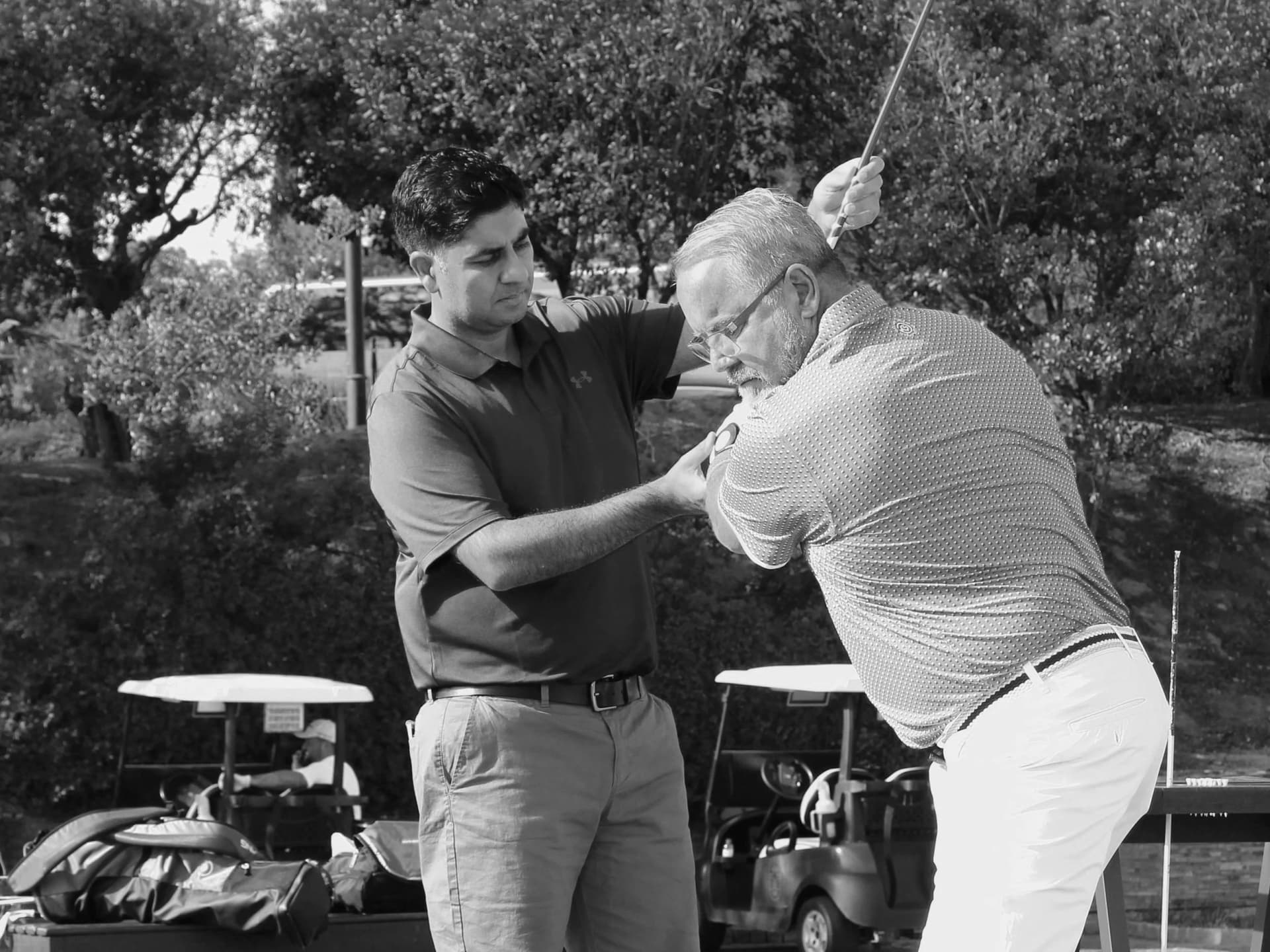
Putting instruction from a PGA professional covers both technique and green reading together. A session on a practice green where you can discuss reads and get feedback on your process is one of the fastest ways to improve.
Browse Browse Our Gift Vouchers or use our Gift Finder.
See also: improve your putting, how to read a golf course, how to play your first round of golf.
Frequently asked questions
How do I read a putt?
Stand behind the ball with the hole in front of you. Look at the overall slope of the green, identify the high side, and trace the path you expect the ball to take. Check from the low side too - this confirms the break. Then commit to your line and trust it.
What is the 'fall line' in putting?
The fall line is the straight uphill-downhill line through the hole. Putts directly on the fall line don't break left or right. Putts from either side of the fall line will curve toward it. Identifying the fall line first simplifies every putt on a given green.
How much should I allow for break?
Most amateur golfers consistently underread break. As a starting point, double the amount of break you initially see. Over time you'll calibrate to your own perception. Faster greens and longer putts require more break allowance than slow greens and short putts.
Founder & Tour Professional
Sandeep Grewal is a former tour professional and the founder of Swyng. He personally handles every booking and redemption.
About Sandeep