
Playing Your First Round of Golf: What to Expect and How to Prepare
Your first round of golf is not going to be perfect - and it doesn't need to be. The goal is to enjoy the experience, understand how the game flows on a real course, and come away wanting to play again.
Most beginners overthink the first round and underprepare for the practical side of it. This guide covers what actually matters.
Straight to the Pin
For a first round, play a shorter or 9-hole course, book a lesson beforehand, and pack a half set with plenty of balls. On the course the priorities are simple: keep up with the pace of play, play ready golf, repair pitch marks and rake bunkers, and set a maximum score per hole so you can pick up and move on. These are on-course skills, so a playing lesson with a PGA pro is a genuinely useful next step.
Before You Go
Play a shorter course first If possible, start on a 9-hole course or a par-3 course rather than a full 18-hole championship layout. Par-3 courses have no fairways to navigate - just tee to green - which means more time practising the short game and less time searching for wayward drives.
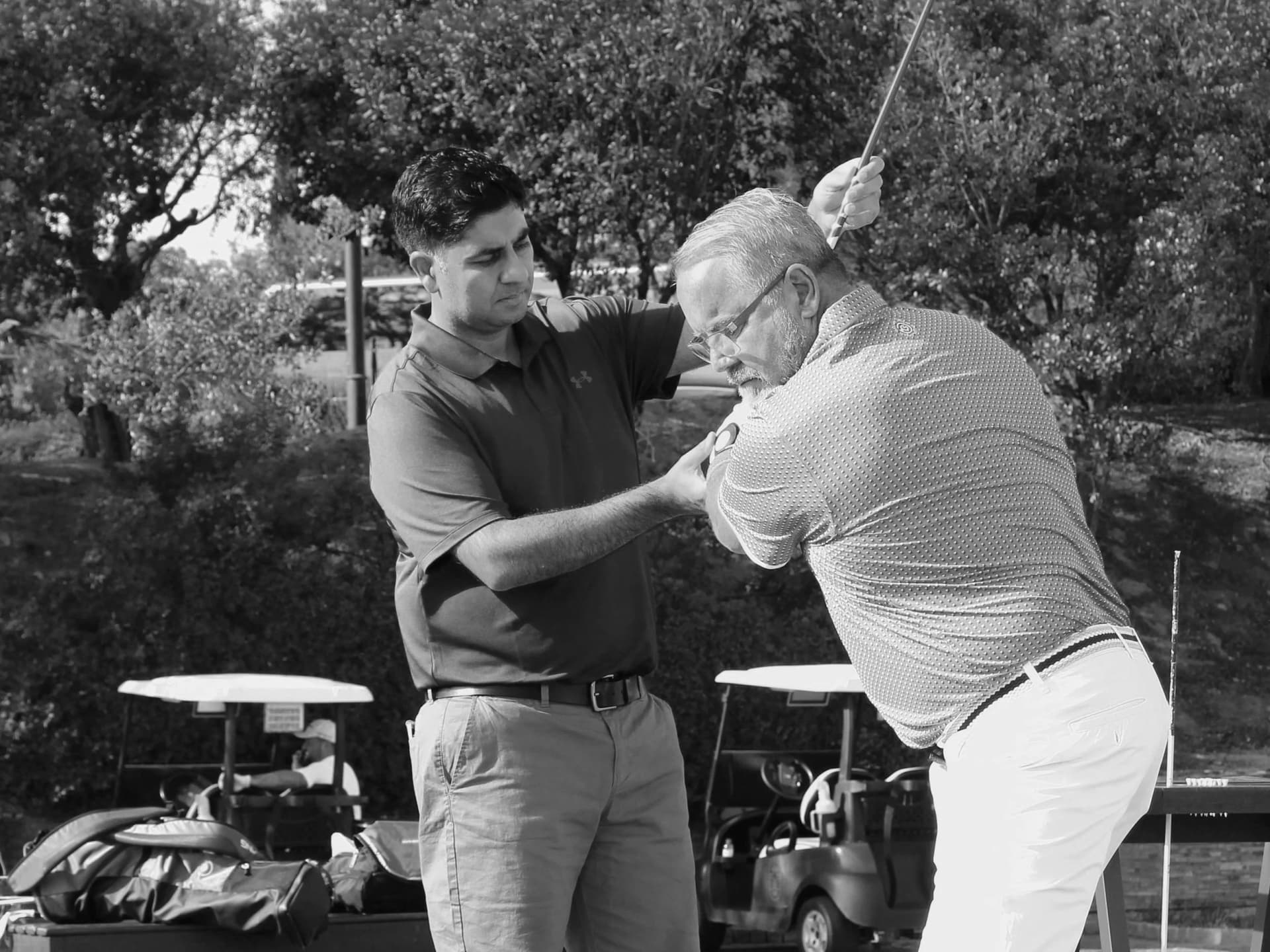
Book a lesson first Even one lesson before your first round makes a significant difference. A PGA professional will give you the basics of grip, stance, and swing that stop the most frustrating beginner mistakes. Without them, the first round can feel like damage limitation rather than enjoyment.
Know the basic rules You don't need to know every rule. You need to know:
- Play the ball as it lies
- Tee up between and behind the tee markers
- Hole out on every green (or pick up if the group agrees on a maximum score per hole)
- Keep up with the group in front
Dress appropriately Most golf courses require a collared shirt and prohibit jeans. Check the dress code when you book. Golf shoes are useful but not essential for a first visit - trainers on a dry day are fine at most public courses.
What to Bring
- Golf clubs (a half set of 7 clubs is plenty for a beginner)
- Golf balls (bring more than you think you'll need - 6 to 12)
- Tees
- A pitch mark repair tool
- Water and a snack for 18 holes
- Sunscreen in warm weather
You don't need a trolley, a rangefinder, or a full bag of 14 clubs. Keep it simple.
Understanding the Format
A standard golf course has 18 holes. Each hole has a par - the number of shots a scratch golfer is expected to take. Par 3 holes are short, par 4 holes are medium length, par 5 holes are longer.
Your score on each hole is measured against par:
| Score | What it means |
|---|---|
| Eagle | 2 under par |
| Birdie | 1 under par |
| Par | Level with par |
| Bogey | 1 over par |
| Double bogey | 2 over par |
For a first round, bogey or double bogey golf is excellent. Most beginners will make several doubles and the occasional worse hole - that is completely normal. Focus on the process, not the scorecard.
On the Course
Keep up with the pace of play This matters more than almost anything else. Watch the group in front and keep pace with them. If you're looking for a ball, spend no more than 2–3 minutes searching. If your group is falling behind, pick up the ball and move on - there's no shame in it on a first round.
Ready golf In social golf, the player who is ready hits first - you don't need to strictly observe the "furthest from the hole plays first" rule. This keeps things moving and takes the pressure off.
Repair your pitch marks When your ball lands on the green and leaves an indentation (a pitch mark), repair it with a pitch fork or tee. Push the edges in and smooth it flat. Other golfers will thank you.
Rake the bunkers After playing out of a bunker, rake the sand smooth and leave the rake outside the bunker. It takes 10 seconds and is expected at every course.
Don't walk on anyone's putting line On the green, avoid walking between another player's ball and the hole. The line of a putt is sensitive - footprints can deflect the ball.
Note
If you're unsure about something on the course, ask your playing partners. Most golfers are happy to explain the etiquette - they were beginners once too.
Managing Your Score
Set a maximum score per hole before you start - 6 or 7 is sensible for a beginner. If you reach it, pick up and move on. Spending 10 shots on a par 4 is demoralising and slows the group down.
Don't try to hit hero shots When you're in trouble - in trees, deep rough, or a difficult lie - play safe. Chip back to the fairway, take your medicine, and give yourself a chance to make a reasonable score. The spectacular recovery is tempting but rarely works.
Play to your strengths If you're more confident with a 7 iron than a driver, use it off the tee. Getting the ball in play is always better than hitting a big drive into the rough.
After the Round
Mark your scorecard and add up your score. Don't worry about what the number says - what matters is how you felt on the course, whether you enjoyed it, and what you'd like to improve.
Most people leave their first round with a list of things they want to work on. That's a good sign. Book a follow-up lesson and address the most obvious issue first.
A PGA professional can take the feeling of that first round and turn it into a clear development plan. Book a golf lesson voucher or use our Gift Finder to find the right type of lesson.
See also: golf for beginners UK, golf rules for beginners, golf etiquette for beginners.
Founder & Tour Professional
Sandeep Grewal is a former tour professional and the founder of Swyng. He personally handles every booking and redemption.
About Sandeep