How to Read a Golf Course: Course Management Tips for Better Scoring

Most amateur golfers lose more shots through poor decisions than poor ball-striking. They aim at the flag when the safe play is to the middle of the green. They reach for the driver when a 3-wood keeps them out of trouble. They try to recover from danger rather than accepting a penalty and moving on.
Course management is about using the game you have - not the one you wish you had.
Straight to the Pin
Lower your score without changing your swing by making smarter choices: know your real club distances, aim at the fat part of the green, and tee up on the danger side so you swing away from trouble. When you find trouble, take your medicine and never compound an error rather than chasing the hero shot. Course management clicks fastest with someone walking the holes alongside you, so a playing lesson with a PGA pro is a genuinely useful next step.
What Is Course Management?
Course management means making smart decisions about where to aim, which club to hit, and how to play each hole based on your own abilities and the risks involved. It's the difference between playing to your potential and playing well below it.
A scratch golfer with poor course management will drop shots unnecessarily. A 20-handicapper with good course management will find the process of a round far more enjoyable - and the scorecard more respectable.
Before You Tee Off
Know your distances Before you can make good decisions, you need to know how far you hit each club. Not the best shot you've ever hit with it - the average. Spend a range session working this out. It changes your whole decision-making process.
Look at the hole layout Most courses provide a yardage book or an app showing each hole from above. A 30-second look before you tee off tells you where the trouble is, where the safe landing areas are, and what the risk/reward looks like for different clubs off the tee.
Understand the pin position Is the flag at the front, middle, or back of the green? Is it tucked behind a bunker? The safe target is usually the middle of the green - especially for mid-to-high handicappers. Aiming at a tucked pin adds risk and rarely pays off.
On the Tee
Play to your landing zone, not your maximum distance Most golfers think about how far they can hit the ball. Better thinkers think about where they want the ball to end up. Pick a landing area that leaves a comfortable approach shot and work backwards to choose the right club.
Avoid the driver when it hurts you On tight par 4s with trouble off the tee, a 3-wood or long iron in the fairway leaves a better angle and a more manageable distance than a driver in the rough. Being 20 yards further back in the fairway is almost always better than being level with the green in trouble.
Tee it on the danger side If there's out-of-bounds down the right side, tee up on the right side of the tee box. You'll be aiming away from the trouble with the whole fairway in front of you.
Note
The best players in the world regularly lay up and take the safe option. It's not a lack of ambition - it's an understanding that a bogey is better than a double.
Playing Your Approach
Miss to the correct side Every green has a better and worse side to miss. Usually it's the side that leaves the easiest chip or pitch back. Work out before you hit which side gives you the simplest next shot, and if you're between clubs, choose the one that errs towards that side.
Give yourself room Short-sided lies - where the ball is close to the edge of the green near the flag - are the hardest shots in golf. Leave yourself room by aiming slightly away from a tucked pin. A longer putt from the centre is much easier than a chip from a tight lie.
Play to the fat part of the green The fat part of the green is the biggest target. Aim there by default unless you have a clear reason to attack a specific flag position - usually only when it's accessible with minimal risk.
When You're in Trouble
Take your medicine When the ball is in trees, deep rough, or a difficult lie, the correct play is almost always the safe one: punch it back to the fairway, accept a dropped shot, and make a bogey rather than a double or worse. The hero shot rarely comes off, and when it doesn't the damage compounds quickly.
Identify the recovery priority Ask yourself: what does a successful recovery look like? Usually it means getting the ball back in play in a position where you can make your next shot comfortably. That's the goal - not getting back as close to the green as possible.
Never compound an error One bad shot is a setback. Two consecutive poor decisions is a scorecard problem. After hitting a bad shot, slow down, reset, and make the simplest, most reliable play available.
Reading Greens
Look at the overall slope first Step back from the green and look at the landscape around it. Is it elevated? Is there a hillside nearby? Water drains away from high points. Understanding the general slope gives you the framework for reading individual putts.
Read from the low side Crouch down on the low side of the hole and look back up the slope. The break is more visible from below than from above or the side.
Pace your distance Walking to the hole and back gives you a feel for the distance that a casual look from the ball never provides. Most three-putts come from misjudged distance, not misread line.
A Simple Decision Framework
Before every shot, ask yourself three questions:
- What is the worst outcome if this goes wrong?
- Is that outcome acceptable?
- Is there a safer play that still gets the job done?
If the worst outcome is unacceptable - out-of-bounds, water, an unplayable lie - take the safer option. If you can live with the worst case, play the shot.
Getting Better Faster
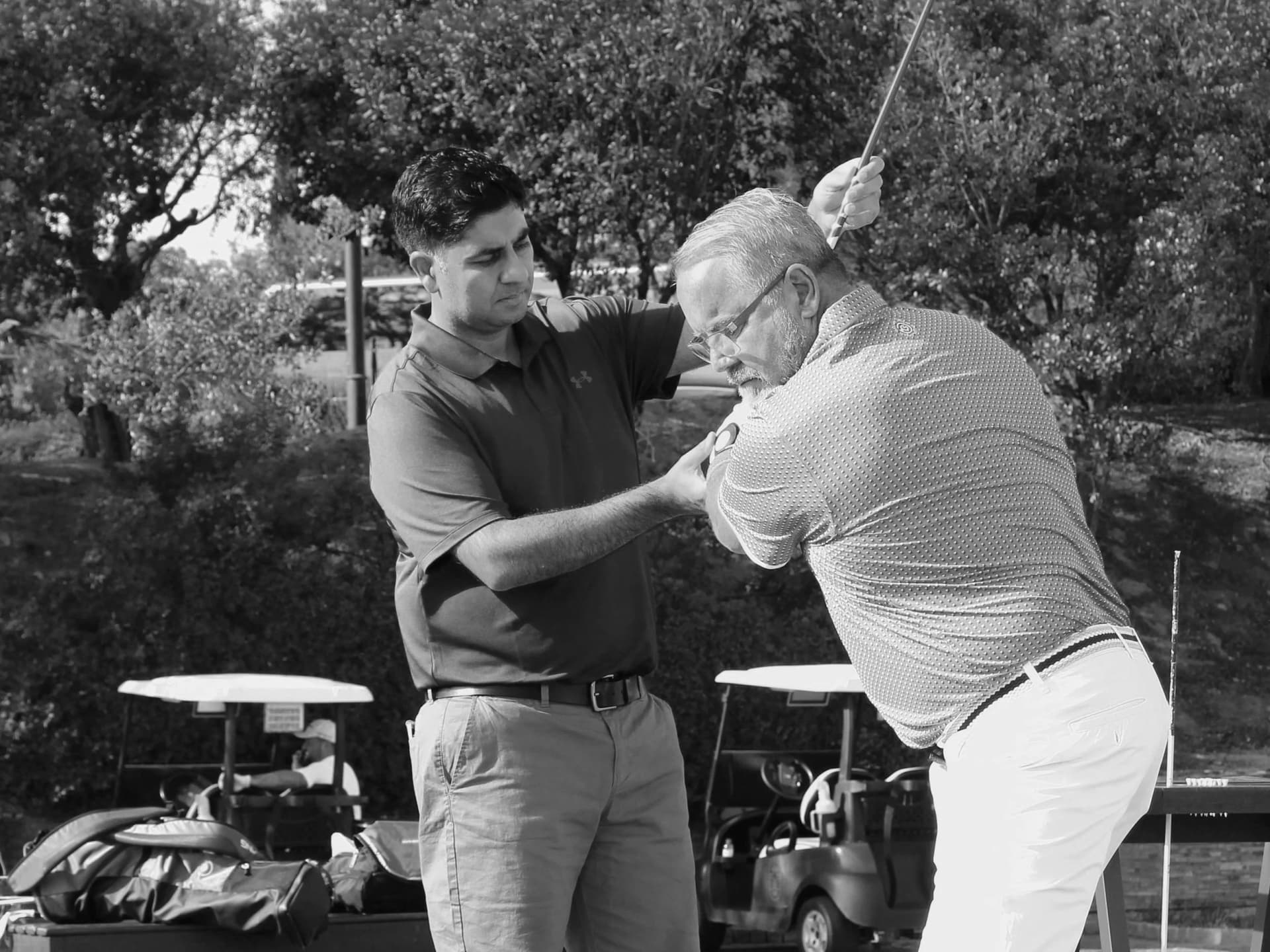
Course management can be improved without hitting a ball. Walking or playing a course with a more experienced golfer and simply watching how they think through each shot is enormously instructive. Ask them why they made the decisions they did.
A playing lesson with a PGA professional - where a coach walks the course with you and discusses each shot in real time - is one of the fastest ways to develop this skill. The improvement in your decision-making transfers immediately to your scorecard.
Browse golf lesson vouchers or use our Gift Finder to find the right type of lesson.
See also: how to play your first round of golf, how to improve your golf swing, common golf mistakes.
Founder & Tour Professional
Sandeep Grewal is a former tour professional and the founder of Swyng. He personally handles every booking and redemption.
About Sandeep