How to Hit Irons Better: Improve Your Iron Play in Golf
The difference between a golfer who scores in the 70s and one who scores in the 90s is often not the driver - it's the irons. Consistent, solid iron play keeps the ball in play, gives you good angles into greens, and sets up achievable putts. Erratic iron play means scrambling from the first tee to the last green.
The good news is that iron play improves quickly with the right fundamentals. Most amateur mistakes come from the same small set of causes.
Straight to the Pin
Clean iron play comes down to striking the ball first, then the ground with a slightly descending blow. Get the setup right, ball position, 55-60% weight on the lead foot, and shaft lean towards the target, then let the lower body lead the downswing so the arms drop into the slot instead of casting. That fixes most fat, thin, pulled and pushed shots. If fat or thin shots keep showing up despite the drills, an hour with a PGA pro can spot the root cause on video and usually correct it in one session.
The Key Principle: Ball First, Then Ground
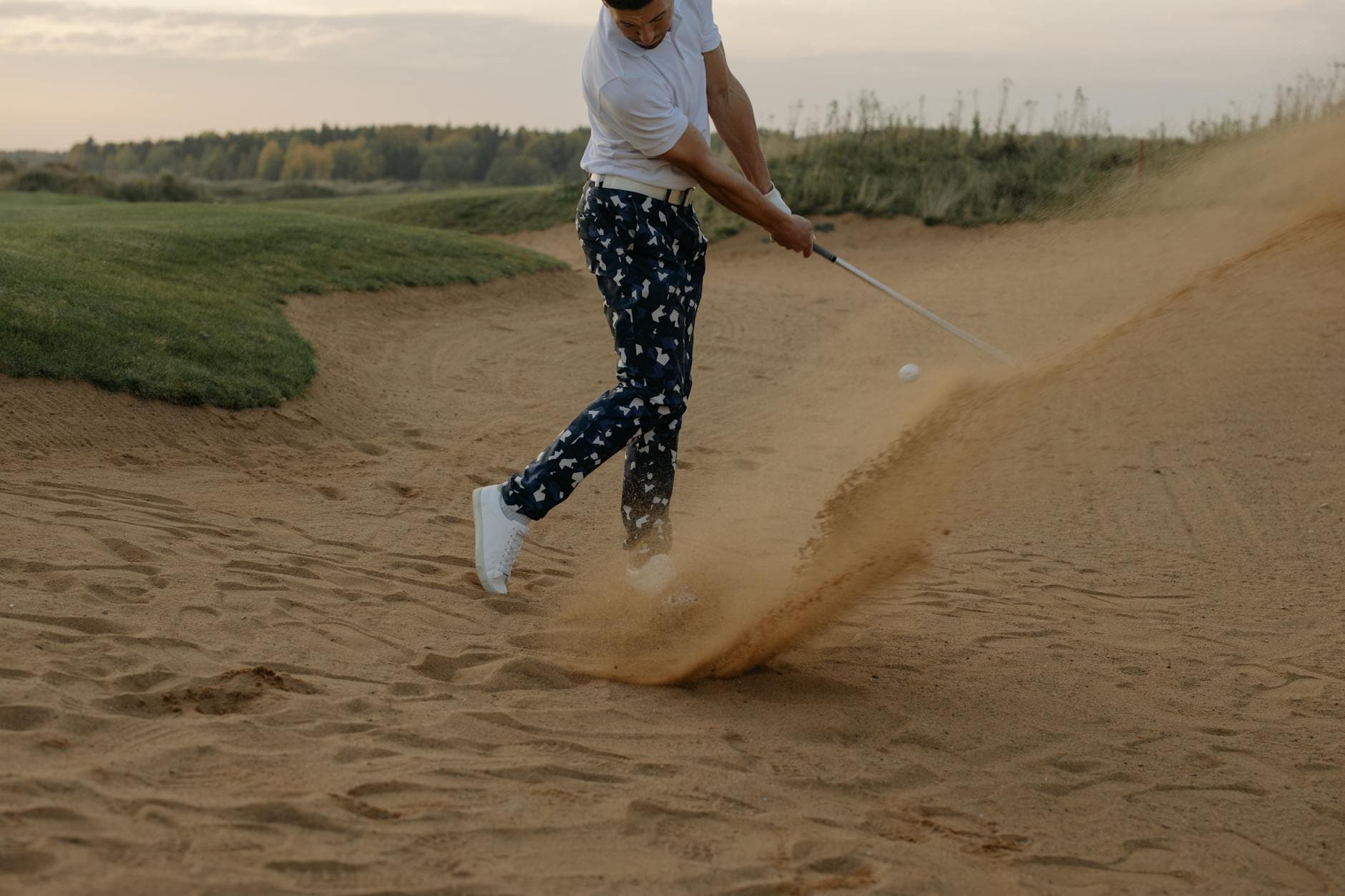
The single most important concept in iron play is striking the ball before the ground. Unlike a driver - where you sweep the ball off a tee - irons are designed to be hit with a slightly descending blow. The clubface contacts the ball first, then takes a divot in front of where the ball was.
If you're hitting the ground before the ball (fat shots) or catching only the top of the ball (thin shots), this principle is being violated.
Setup for Iron Shots
Get the setup right and the swing has a much better chance.
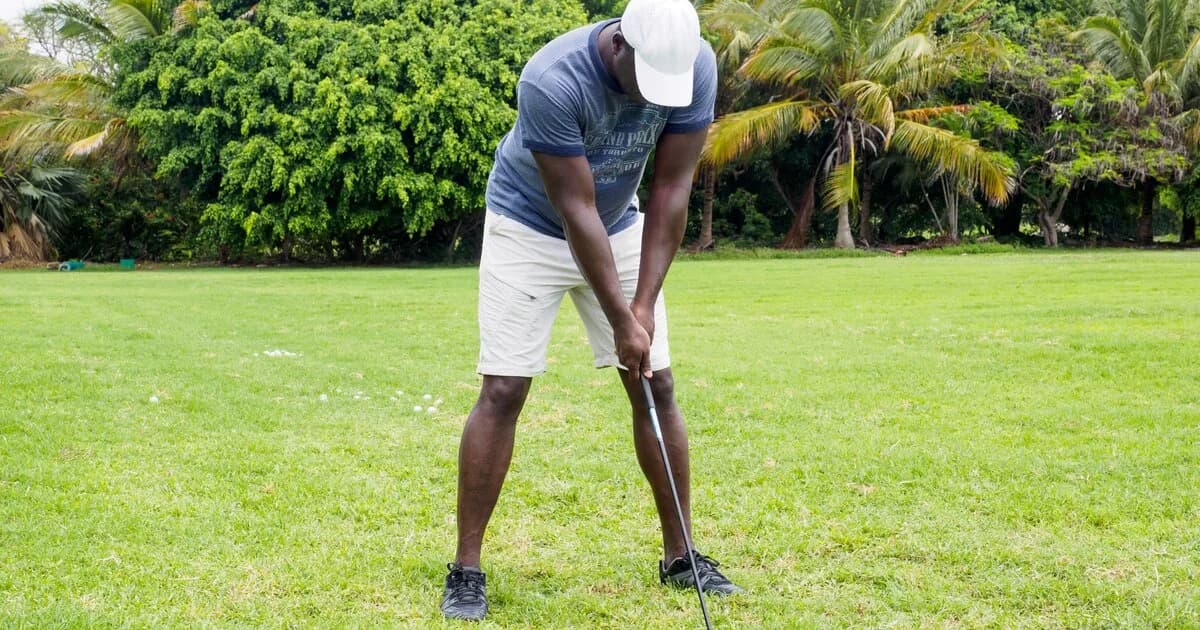
Ball position For mid-irons (5–7 iron), the ball should sit just forward of centre in your stance. For short irons (8 iron–pitching wedge), it moves slightly further back - roughly in the middle of your stance. Long irons and hybrids sit further forward, closer to your lead heel.
Weight distribution At address, 55–60% of your weight on the lead foot. This encourages the descending strike that produces clean contact.
Shaft lean Your hands should be slightly ahead of the ball at address - the shaft leaning towards the target. This is the "forward press" and it sets you up for solid impact. If the shaft is leaning away from the target (hands behind the ball), you'll be scooping.
Posture Bend from the hips - not the waist - and let your arms hang naturally. Your spine should be straight, your knees slightly flexed. Hunching over the ball makes it hard to rotate properly through the shot.
The Downswing Sequence
Most iron mistakes happen in the downswing. The correct sequence is:
- Lower body leads - the hips begin to rotate towards the target before the arms start down
- Arms drop into the slot - rather than casting (throwing the club outward from the top)
- Impact - weight on the lead foot, hands ahead of the ball, descending strike
- Follow-through - full rotation, chest facing the target, balanced finish
The most common fault is reversing this sequence - spinning the shoulders first (the over-the-top move) or hanging back on the trail foot through impact.
Note
A useful thought: feel like you're trying to take a divot in front of where the ball is sitting, not underneath it. This one mental shift fixes a lot of fat shots.
Common Iron Play Mistakes
The fat shot (heavy, before the ball) Caused by: weight staying on the trail foot through impact; trying to help the ball up; early extension (standing up through the shot). Fix: keep your weight moving forward through the downswing. Feel your lead hip clearing towards the target.
The thin shot (catching the top of the ball) Caused by: rising up through impact; the same early extension issue; standing too close to the ball at address. Fix: maintain your spine angle through impact. The club should return to the same height it was at address.
The pull (straight left for right-handers) Caused by: an over-the-top swing path with a square or closed face. Fix: feel the club dropping down on the inside on the downswing rather than being thrown outward.
The push (straight right) Caused by: too much inside-out swing path; the body stalling through impact. Fix: ensure the hips are clearing fully through impact, not blocking the arms from releasing.
Inconsistent distance control Caused by: inconsistent contact - some shots thin, some fat, some solid. Fix: this usually indicates setup inconsistency. Check ball position and shaft lean are the same every time.
Three Drills for Better Iron Play
Drill 1: The divot board Hit balls off a piece of carpet or a plastic mat with a line marked on it. The divot (or scuff mark) should start at the line or just in front - not behind it. This gives immediate feedback on whether you're hitting the ball first or the ground first.
Drill 2: Feet together Hit short irons (9 iron, pitching wedge) with your feet together. This removes the option of using your lower body improperly and teaches the body rotation and balance that good iron play requires. After 20 shots with feet together, return to a normal stance - the sensation carries over.
Drill 3: Alignment stick in the ground Place an alignment stick in the ground at 45 degrees, pointing away from you, just outside and ahead of the ball. Your goal is to swing the club down without hitting the stick. This encourages an inside-out path and prevents the over-the-top move that causes pulls and thin shots.
Club Selection
Most amateurs underclub with irons. The instinct is to swing harder - but harder swings are less consistent. If you're between a 7 and 8 iron for a shot, take the 7 and swing at 80%. The more relaxed swing produces better contact and, often, better distance.
Know your average distances - not your best distances - and club accordingly.
When to See a Coach
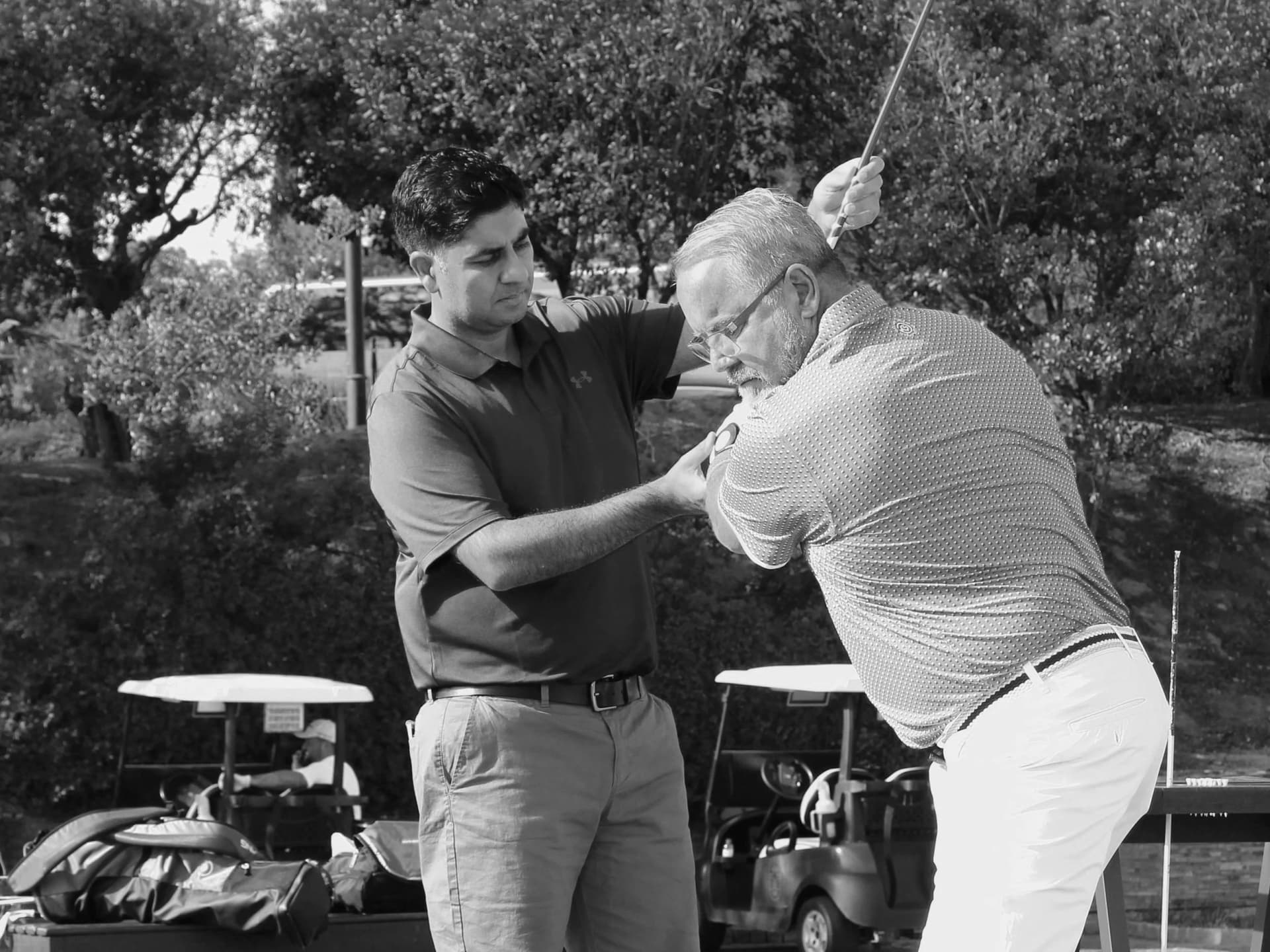
If you're consistently hitting fat or thin shots despite working on the above, a single lesson with a PGA professional will identify the root cause faster than any amount of solo practice. Iron play faults are usually visible immediately on video and often correctable in one session.
Browse golf lesson vouchers or use our Gift Finder to find the right lesson type.
See also: how to improve your golf swing, how to stop slicing the ball, how to chip a golf ball.
Founder & Tour Professional
Sandeep Grewal is a former tour professional and the founder of Swyng. He personally handles every booking and redemption.
About Sandeep