
Golf Swing Tempo: Why Smooth Beats Fast Every Time
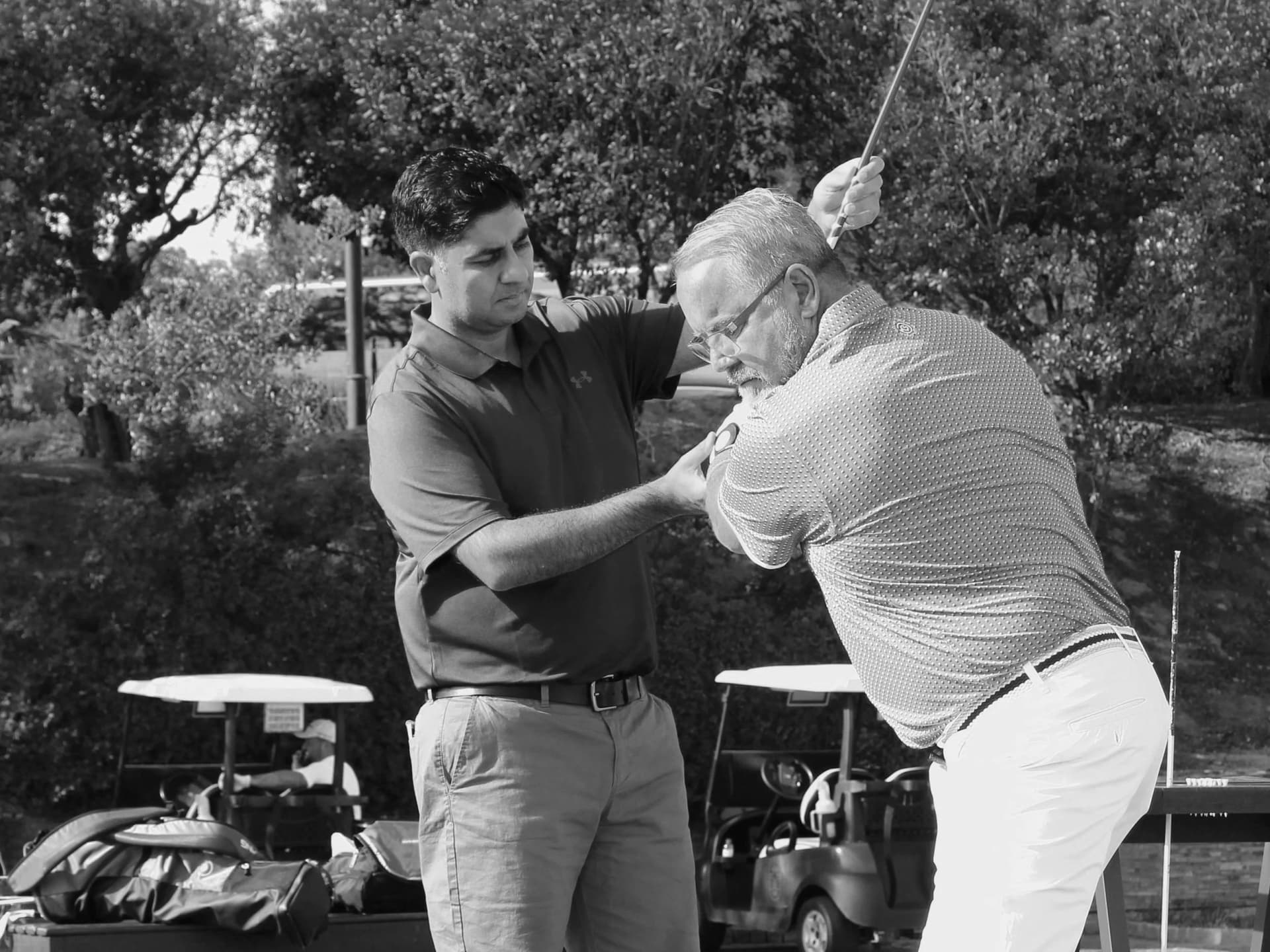

If you watch tour players swing in slow motion, one thing stands out: they all look unhurried. The clubhead never seems rushed, the backswing has a distinct pause at the top, and the downswing flows through impact without any obvious burst of effort. That is tempo - the rhythm of the swing - and it might be the single most important thing separating consistent golfers from inconsistent ones.
You can have textbook positions and still play badly if your tempo is off. You can have a homemade swing and still play well if your tempo is good. Fixing tempo is one of the fastest routes to lower scores because it improves ball striking, distance, and shot dispersion at the same time - without changing anything technical about how you swing.
Straight to the Pin
Good tempo means your backswing takes roughly three times as long as your downswing. Tour players average a 3:1 ratio regardless of swing style. To find yours: count "one-two-three" on the way back, "one" on the way down. Feel that the club accelerates smoothly rather than being yanked from the top. Practise with short irons at 70% effort and let the speed come from rhythm, not force. If your ball striking is inconsistent and every swing feels different, a tempo-focused lesson with a PGA pro is one of the quickest fixes in golf.
What Is Tempo?
Tempo is the total time your swing takes from the takeaway to impact, and - more importantly - the ratio between backswing and downswing.
The pattern is remarkably consistent across professional golf. Tour swings measured on high-speed cameras almost always show:
- Backswing: roughly 0.75 seconds
- Downswing: roughly 0.25 seconds
- Ratio: 3 to 1
That 3:1 ratio holds whether the player has a slow, deliberate swing like Ernie Els or a quick, snappy one like Rickie Fowler. The absolute speed differs. The ratio does not.
Amateur golfers vary wildly. Some rush the backswing to a 2:1 ratio and then decelerate on the way down. Others take a slow backswing but jerk the transition, closer to 4:1. Both patterns produce inconsistent contact.
Why Tempo Matters More Than You Think
Tempo affects almost every part of ball striking:
Sequencing A rushed backswing gives the body no time to complete its turn. The arms outrun the shoulders and the whole swing starts out of sync. Even a technically correct swing falls apart if it's crammed into too little time.
Transition The critical moment in the swing is the change of direction from backswing to downswing. If the transition is smooth, the lower body has time to lead and the arms follow naturally. If it's jerky, the arms take over and the swing becomes an arms-only chop.
Distance Counter-intuitive but real: smooth tempo produces more distance than aggressive tempo. Rushed swings shorten the backswing, tighten the muscles, and reduce the arc - all of which cost speed. A tour player looks like they're swinging at 80% because the tempo is so relaxed. They're actually swinging at 100% of what their body can deliver smoothly.
Consistency Two golfers with identical technique but different tempos will hit wildly different shots. Consistent tempo produces consistent contact. Variable tempo produces variable results - one perfect shot, one thin, one fat, one pull.
How to Find Your Own Tempo
Everyone has a natural tempo. Some people move quickly through everything they do; others are naturally slower. The goal is not to imitate someone else's rhythm - it's to make your own repeatable.
The counting method This is the simplest way to build feel. As you swing:
- Count "one-two-three" during the backswing
- Count "one" during the downswing
Try it at half speed first. Once the rhythm feels natural, gradually move up to full swings. Most golfers who try this on the range for ten minutes report cleaner contact within the same session.
The music method Some coaches recommend a favourite song or a metronome app set to 76 beats per minute - a common tempo that fits the natural 3:1 ratio. Whistle or hum through the swing and let the beat set the timing.
The video method Record your swing on your phone in slow motion. Time the backswing in seconds and the downswing in fractions. If your ratio is 2:1 or 4:1, you know exactly which direction to correct.
Why Amateurs Rush the Transition
The single most common tempo error is speeding up at the top of the backswing. It happens for one of three reasons:
- Trying to hit hard - the body senses a fast strike is needed and jumps into the downswing before the backswing has finished
- Fear of losing balance - a full turn feels awkward, so the golfer starts back down before reaching the top
- Copying professionals on TV - pro downswings look fast because they are, but they only work because everything before them is unhurried
The fix in all three cases is the same: feel a pause at the top. Even a fractional pause resets the rhythm and gives the lower body time to start the downswing. The best swing thought here is "wait for it" - let the club get to the top before starting down.
Note
The pause at the top is not literal - no tour player actually stops the club. But the feeling of pausing is what produces the correct 3:1 ratio. If you don't feel a pause, you're probably transitioning too fast.
Three Drills for Better Tempo
Drill 1: The count drill Every swing on the range, count out loud: "one-two-three, one" through the swing. Do this for a full basket of balls. It sounds simple, but the effect is immediate - you cannot rush the transition if you're counting evenly. Ten minutes of this rebuilds the sense of rhythm faster than any technical drill.
Drill 2: Swings without stopping Take your normal setup. Instead of finishing your swing and then resetting, immediately swing again from the finish position back to the address. Then again. Then again. Ten continuous, rhythmic swings without stopping. This trains a smooth, self-correcting rhythm because you can't fight your own momentum.
Drill 3: Short-club, full-swing Hit half-wedges at half speed. Feel the club swing you, not the other way round. Then step up to a mid-iron and try to keep the same rhythm - you'll instinctively swing a little faster to compensate for the longer club, but the ratio should stay the same. This drill teaches that tempo is separate from speed. You can swing quickly with good tempo or slowly with bad tempo. The ratio is what matters.
The Tempo Trap: Overthinking
Tempo is best trained without thinking about it. The counting drill works because it distracts you from mechanics. The music method works because it hijacks the part of your brain that would otherwise try to control the swing consciously.
If you find yourself thinking about tempo during the swing - trying to feel the ratio, forcing the pause - you'll almost always make it worse. Tempo is a rhythm, not a position. Build it through drills, then trust it on the course.
When Tempo Changes Under Pressure
Every golfer's tempo speeds up under pressure. First tee jitters, a par putt to win the match, a nervous approach over water - the body's natural response is to swing faster. This is when good tempo pays off the most, and when bad tempo shows up worst.
Two habits help:
A pre-shot routine that includes a rehearsal swing The rehearsal is not just to feel the shot - it's to reset your tempo. If your practice swing is smooth, the real one usually follows.
A trigger phrase Some players use "smooth" or "one-two-three" as a mental cue right before takeaway. It sounds trivial but it works - a single word can prevent your body from switching into panic tempo when it matters.
When to Get a Lesson
Tempo problems are usually visible to a PGA pro within one or two swings on video. A short lesson focused specifically on rhythm can transform a golfer's consistency without changing any other part of their technique. If you're grinding on technical positions and still hitting inconsistent shots, a tempo lesson is often the missing piece.
Browse golf lesson vouchers or use our Gift Finder to find the right lesson type for your game.
See also: how to improve your golf swing, how to hit a driver, how to add distance to your golf swing, how to improve your iron play.
Founder & Tour Professional
Sandeep Grewal is a former tour professional and the founder of Swyng. He personally handles every booking and redemption.
About Sandeep