How to Hit a Driver: Setup, Swing & Common Mistakes

The driver is the club that decides how the rest of the hole plays out. A drive down the middle turns a par four into a wedge and a putt. A slice into the trees, and you're chipping out sideways before you've hit your second shot.
Most golfers try to fix the driver with more speed. In reality, the setup does most of the work, and swinging slower with a wider arc almost always produces longer drives than swinging harder. Get the fundamentals right and the ball goes further, straighter, and with less effort.
Straight to the Pin
Hit driver longer and straighter by fixing the setup first: ball forward off the lead heel, tee it high (half the ball above the crown), wide stance (shoulder width plus a couple of inches), and spine tilted away from the target so your lead shoulder is higher than your trail shoulder. Then swing wide, not fast - make a full turn, feel like you're brushing up on the ball, and let the club do the work. If your drives leak right or you're losing distance, one lesson with a PGA pro can spot the cause in five minutes.
Why the Driver Is Different
Every other club in the bag is designed to hit down on the ball. The driver is the opposite: the ball is teed up, and you want to catch it slightly on the way up. That single fact changes almost everything about the setup.
A good drive is a mix of three things:
- Clubhead speed - how fast the head is moving through impact
- Centre-face contact - hitting the sweet spot rather than the toe or heel
- Angle of attack - swinging up on the ball rather than down
Amateurs who hit short, weak drives are almost always steep (swinging down) and off-centre. The fix isn't more effort - it's a wider swing and a better strike.
The Driver Setup
Get the setup right and half the work is done before you move the club.
Ball position Place the ball opposite the inside of your lead heel (left heel for right-handed golfers). Further forward than any other club in the bag. This lets the clubhead catch the ball on the upswing.
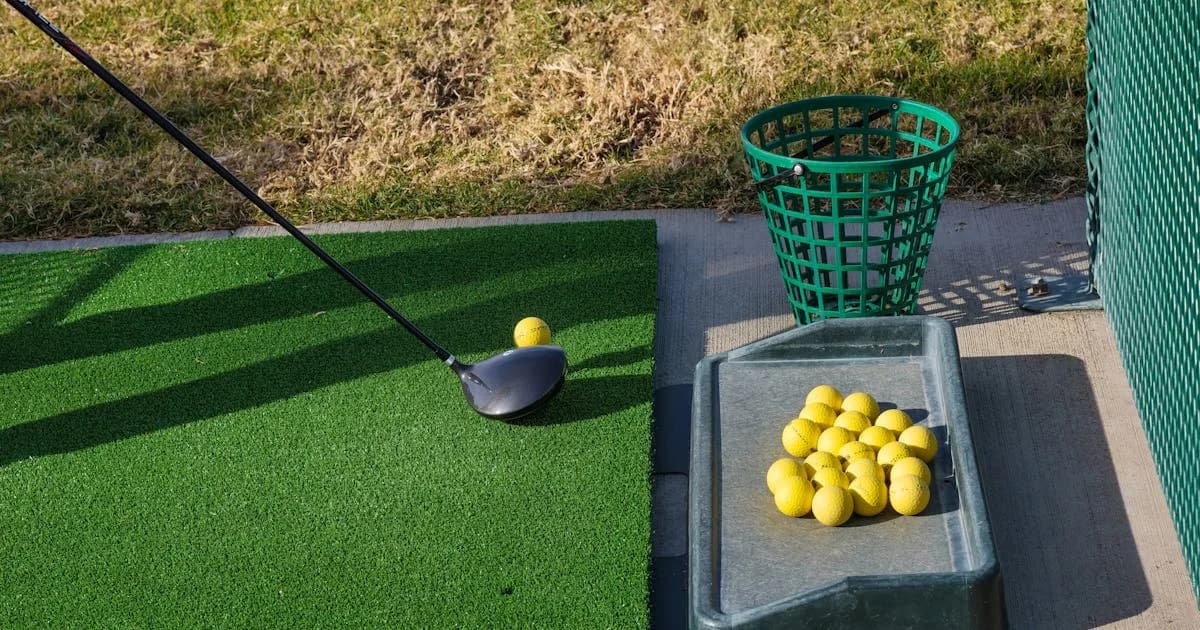
Tee height Tee it high. Roughly half the ball should sit above the top of the driver crown when the club is grounded next to it. A low tee encourages a downward strike and pop-ups.
Stance width Feet slightly wider than shoulder width. A wide base gives you the stability to make a full turn without falling off balance.
Spine tilt This is the move most amateurs miss. At address, tilt your spine slightly away from the target so your lead shoulder is higher than your trail shoulder. Think of it as leaning into your back foot at the shoulders (not the hips). This pre-sets the upward strike.
Grip pressure Light. On a scale of 1 to 10, aim for 4 or 5. A tight grip locks the wrists and kills clubhead speed. If your forearms are tense at address, the swing is already compromised.
Alignment Feet, hips, and shoulders parallel to the target line - not aimed at the target. Imagine two railway tracks: the ball sits on the outer track, your body on the inner one.
The Driver Swing
Once the setup is right, the swing itself becomes simpler.
Takeaway Move the club back low and wide. The first foot of the takeaway sets the width of the whole swing - a narrow takeaway leads to a narrow, chopping downswing. Feel like you're pushing the club away from the ball with your lead arm.
Backswing Turn your shoulders as far as your flexibility allows. Feel your back facing the target at the top. The wider the arc, the more speed you generate without effort.
Transition This is where amateurs lose it. The first move down should come from the ground up - a small weight shift into your lead foot, then the hips, then the arms. Most golfers throw the club from the top with their hands, which steepens the swing and produces slices and pull-hooks.
Impact Feel like your chest is behind the ball at contact. That trailing chest position lets the clubhead swing up through impact instead of down. If you finish with your weight back and your chest tall, you'll hit high, long drives.
Follow-through Full finish with the belt buckle pointing at the target. If you're falling backwards after impact, your weight didn't shift properly. If you finish balanced, the swing was probably in good shape.
Note
The best swing thought for most amateurs is "swing wide, not fast." Width creates speed automatically. When you try to swing hard, the arms shorten and the club actually slows down.
Common Driver Mistakes
The slice The ball starts left of target and curves hard right (for a right-handed golfer). Almost always caused by an out-to-in swing path combined with an open clubface at impact. Read our how to stop slicing tip for the full fix.
Popping it up Sky mark on the top of the driver crown. Caused by teeing the ball too low and chopping down on it. Fix: tee it higher, move the ball forward, and add the spine tilt at address.
Losing distance Weak, short drives usually come from a narrow, arms-only swing. Fix: widen the takeaway and make a bigger shoulder turn. Distance comes from arc, not effort.
Topping the ball Rolling the ball along the ground off the tee is usually a stand-up move - the golfer straightens their spine on the downswing and the clubhead misses over the top of the ball. Fix: keep your chest angle steady into impact. Feel like you're staying in your posture until the ball is gone.
Over-swinging Going past parallel at the top, losing balance, then throwing the club at the ball. Fix: shorten the backswing until you feel balanced at the top. A three-quarter backswing hit well will always outdrive a full backswing hit badly.
Three Drills to Improve Your Driver Swing
Drill 1: Pump drill for transition Take your normal backswing. From the top, "pump" the club down to hip height twice, then swing through and hit the ball on the third rep. This trains the lower body to lead the downswing instead of the hands.
Drill 2: Feet-together driver swings Place your feet together and hit half-speed drives off a low tee. You'll lose balance immediately if you try to swing hard. This forces a smooth tempo and rewards clean contact. Even ten balls of this at the range resets your rhythm.
Drill 3: Tee-tap upswing drill Set up as normal but put a spare tee in the ground an inch behind the ball. Your goal: swing through and clip the ball without hitting the tee behind it. This trains the upward strike and stops steep, downward driver swings.
What About Driver Length and Loft?
If you're struggling with a driver you've had for years, the club might be part of the problem - but not always.
Loft: If your swing speed is under 90 mph (most amateur men and nearly all women), a 10.5° or 12° driver launches higher and further than a 9° pro-spec head. Higher loft is not a beginner club - it's just correct physics for slower swings.
Length: A 46-inch driver is only easier to hit far if you catch the middle of the face. Most amateurs hit longer, straighter drives with a 44 or 45-inch shaft because they find the sweet spot more often.
Shaft flex: Too stiff a shaft costs distance across the board. Regular or senior flex is right for the vast majority of amateurs.
If you're not sure whether your driver fits, a club fitting session or a lesson that includes launch monitor data will tell you in one visit.
When to Get a Lesson
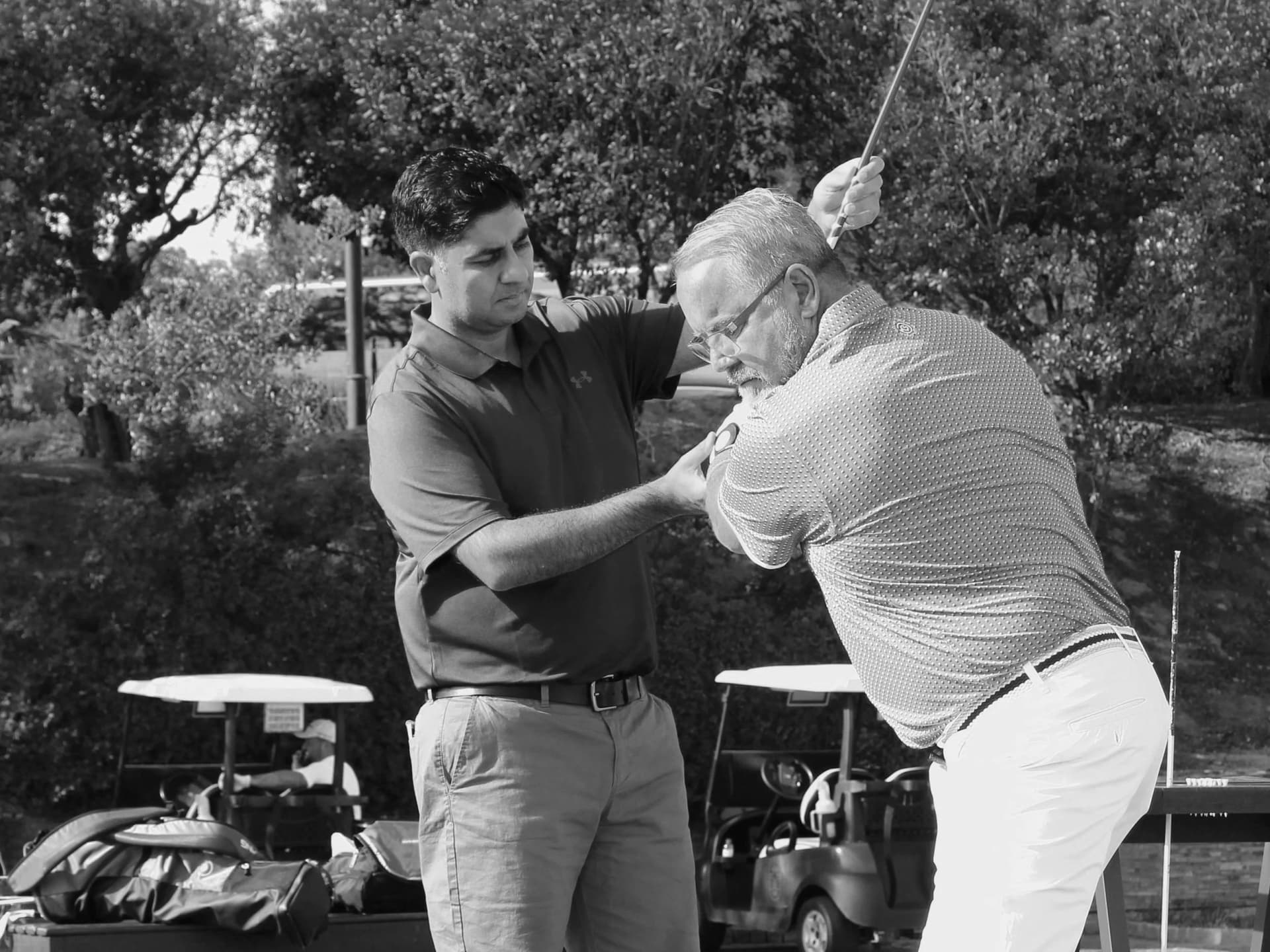
Driver technique is one of the fastest things a PGA pro can fix. The setup errors that cause slices, pop-ups and short drives are visible in the first swing on video - and correctable inside a single session. If you're losing three or four shots a round off the tee, a driver lesson is one of the best investments in your golf.
Browse golf lesson vouchers or use our Gift Finder to find the right lesson type for your game.
See also: how to stop slicing the ball, how to improve your golf swing, how to grip a golf club, common golf mistakes.
Founder & Tour Professional
Sandeep Grewal is a former tour professional and the founder of Swyng. He personally handles every booking and redemption.
About Sandeep