How to Hit Fairway Woods and Hybrids: Tips & Technique

Fairway woods and hybrids sit in an awkward middle ground. They're not a driver, so you can't tee the ball up and swing up on it. They're not an iron, so hitting down and taking a divot produces a low, weak shot that runs out of steam. Most amateurs pick one habit or the other and then wonder why the club never works.
The answer is a sweeping strike - brushing the turf rather than digging into it, catching the ball at the bottom of a shallow arc. Once you understand that, both clubs become some of the most useful in the bag: long enough to reach par fives in two, forgiving enough to escape rough, and reliable enough to trust off the tee on a tight par four.
Straight to the Pin
Hit fairway woods and hybrids by making a sweeping strike, not a downward one. Setup: ball just inside the lead heel (fairway wood) or two ball-widths back from that (hybrid), shoulder-width stance, light spine tilt away from the target, hands roughly level with the ball. Then swing wide and shallow - feel like you're brushing the grass rather than digging into it. If you're topping fairway woods or hitting them thin, one lesson with a PGA pro will fix the setup habits behind it inside a single session.
Fairway Wood vs Hybrid: What's the Difference?
A fairway wood (3-wood, 5-wood, 7-wood) has a large, rounded head and a long shaft. Designed for maximum distance from the deck, but harder to strike consistently because the shaft is long and the face is shallow.
A hybrid replaces the long irons (2, 3, 4 iron). Smaller head, shorter shaft, wider sole. Designed to be more forgiving and easier to launch than the equivalent long iron.
Rule of thumb:
- Fairway wood for distance from clean lies, and off the tee when you want more control than a driver
- Hybrid for versatility from rough, tight lies, and awkward mid-length shots
Both clubs share the same core technique. The setup and swing differences are minor but important - we'll cover them below.
Why These Clubs Are Difficult
The long shaft and low loft mean small setup errors show up big at impact. Common issues:
- Golfers try to help the ball into the air by leaning back and scooping - the club bottoms out behind the ball or catches the equator
- Golfers swing too steep, treating the club like a long iron - the ball comes out low and short with a fat divot behind it
- Golfers swing too hard to compensate for the low loft - the arms disconnect from the body and contact goes off-centre
The fix is the same in every case: a shallow, sweeping swing with a stable base.
The Fairway Wood Setup
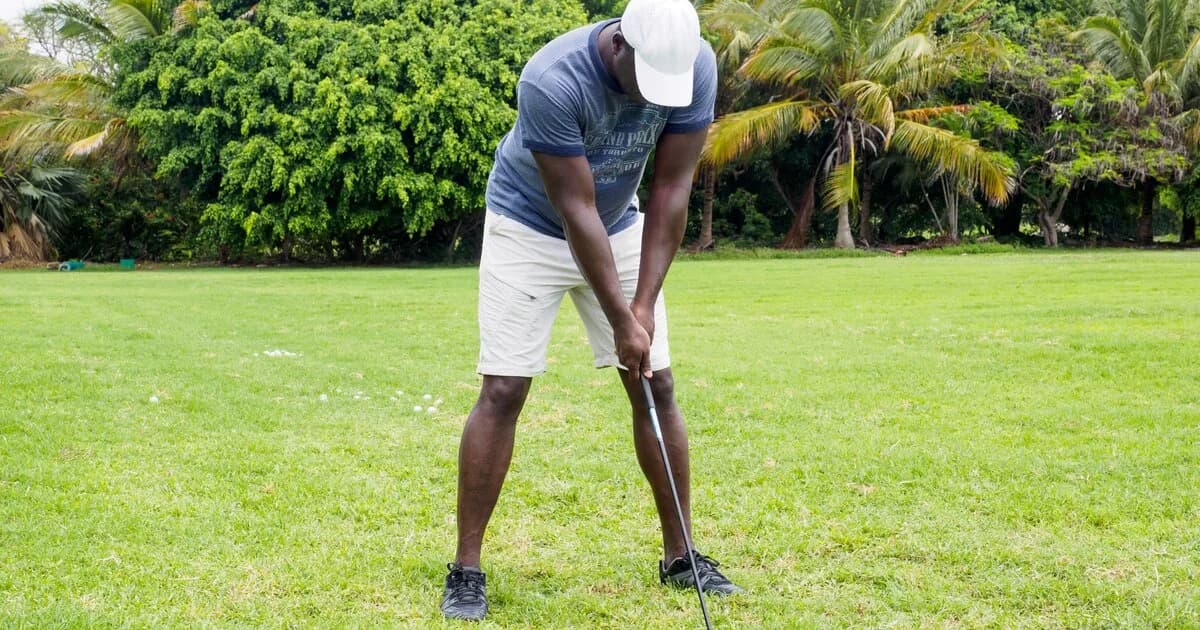
Ball position Just inside your lead heel. Not as far forward as a driver, but well forward of centre. This lets the clubhead catch the ball at the low point of a shallow arc.
Stance width Slightly narrower than driver, roughly shoulder width. You need stability, but not the extremes of a driver stance.
Spine tilt A small tilt away from the target - less than a driver, more than an iron. Lead shoulder just slightly higher than the trail shoulder at address.
Hands Level with the ball, or very slightly ahead. Don't push the hands aggressively forward like you would for an iron - that de-lofts the club too much.
Weight distribution Roughly 50/50 at address. Don't preset your weight forward like an iron shot - you want to feel balanced so the clubhead can sweep through impact.
The Hybrid Setup
Almost identical to a fairway wood, with two adjustments:
- Ball position: two ball-widths back from where you'd put it for a fairway wood - roughly one ball-width forward of centre
- Hands: very slightly ahead of the ball, more like a long iron
Hybrids are shorter than fairway woods and their leading edge is more like an iron's, so a fractionally more downward strike works better. But it's still a sweep, not a chop.
The Swing
Takeaway Wide and low, same as with a driver. Feel your lead arm pushing the club away from the ball. A narrow takeaway leads to a steep, chopping downswing which is the enemy of these clubs.
Backswing Full shoulder turn. Because the shaft is long, you don't need to feel like you're forcing anything - a smooth turn generates plenty of speed.
Transition Weight shifts into the lead foot first, then the hips rotate, then the arms follow. This sequence keeps the swing shallow. If your first move down is with the hands or shoulders, the club steepens and you'll either dig or thin the ball.
Impact and follow-through Feel the clubhead brush the turf just after the ball. Not a divot - a scuff. If you're taking chunks of turf with a fairway wood, the swing is too steep. Full finish, belt buckle facing the target, weight fully into the lead foot.
Note
The best swing thought for fairway woods and hybrids is "sweep, don't dig." The ball is sitting on the ground - you don't need to lift it. The loft on the clubface does the work. Your job is to deliver the club shallow and level.
Common Mistakes
Topping the ball The ball rolls forward along the ground. Caused by leaning back at impact and trying to help the ball into the air. Fix: keep your chest angle steady into impact and trust the loft.
Hitting it fat (chunking) The club digs into the ground behind the ball. Caused by an over-steep swing or ball position too far back. Fix: check ball position (just inside lead heel for fairway wood), and widen the takeaway to shallow out the swing.
Weak, low ball flight Low, floating shots that lose distance. Caused by a de-lofted strike - hands too far ahead, ball too far back, or leaning too far into the shot. Fix: hands level with the ball, weight neutral at address.
Slicing fairway woods Same cause as slicing a driver - an out-to-in path and open face. See our how to stop slicing tip. The fix applies equally here.
Struggling from the rough Fairway woods rarely work well from thick rough - the shaft is too long and the head gets grabby. Switch to a hybrid, which cuts through rough far better because of its shorter shaft and heavier head.
Three Drills to Improve Your Fairway Wood and Hybrid Strike
Drill 1: The tee drill Tee the ball up half an inch off the ground and hit fairway wood shots as if it were on the deck. This trains the sweeping strike - you'll top it if you swing too steep, and you'll chunk the tee if you swing too under. Once you're striking it cleanly off a low tee, take the tee away.
Drill 2: The line drill Draw a straight line in the sand of the practice bunker, or lay a rope on the range mat. Place the ball on the line. Your goal: your club should scuff the turf on or just after the line, never before. If you're scuffing before the ball, the swing is too steep.
Drill 3: Half-swing hybrid Hit shots with a hybrid using only a three-quarter backswing at 80% pace. Focus on tempo and clean contact rather than distance. Most amateurs hit hybrids further this way than at full effort - proof that these clubs reward smooth swings.
When Should You Carry Each?
Most golfers benefit from a mix. A typical bag setup:
| Club | Best for |
|---|---|
| 3-wood | Off the tee on tight holes, long approaches from clean fairway lies |
| 5-wood or 7-wood | Long par threes, second shots on par fives from good lies |
| 3 or 4 hybrid | Replacing the 3 and 4 iron - approaches from rough, awkward yardages, escape shots |
A 7-wood is one of the most underrated clubs for amateur men and virtually all women - higher launching and more forgiving than a 3-iron or even a 3-hybrid, and easier to hit than a 5-wood for anyone with a slower swing.
When to Get a Lesson
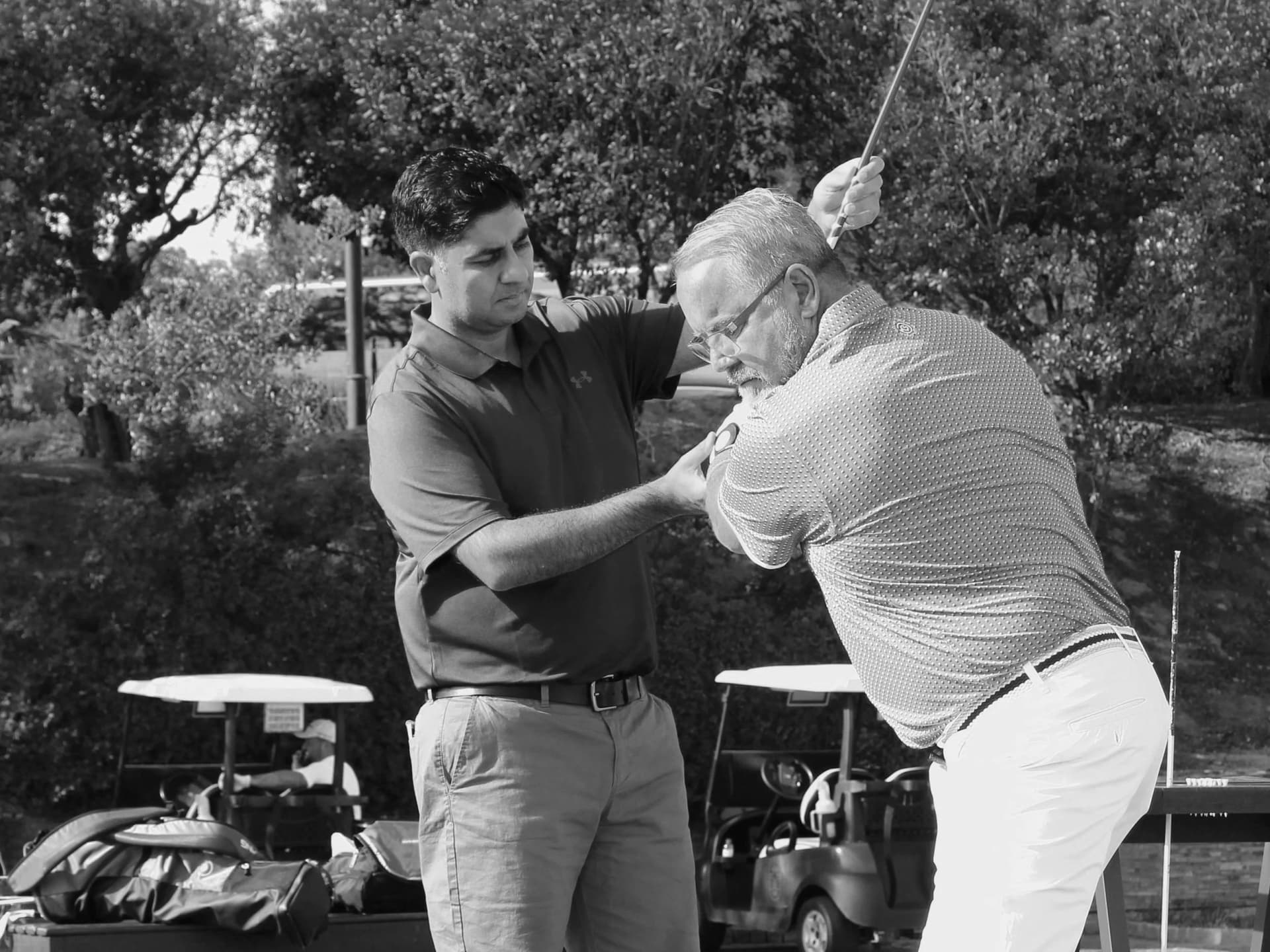
Fairway wood and hybrid technique is one of the fastest things a PGA pro can improve. The setup habits behind topped and thin shots are usually visible on video within a swing or two, and fixable in one session. If you're skipping over these clubs because you don't trust them, one lesson can bring three clubs back into your bag - and shorten most par fives by 40 or 50 yards in the process.
Browse golf lesson vouchers or use our Gift Finder to find the right lesson type for your game.
See also: how to hit a driver, how to improve your iron play, how to improve your golf swing, how to stop slicing the ball.
Founder & Tour Professional
Sandeep Grewal is a former tour professional and the founder of Swyng. He personally handles every booking and redemption.
About Sandeep