Chipping vs Pitching: What's the Difference and When to Use Each
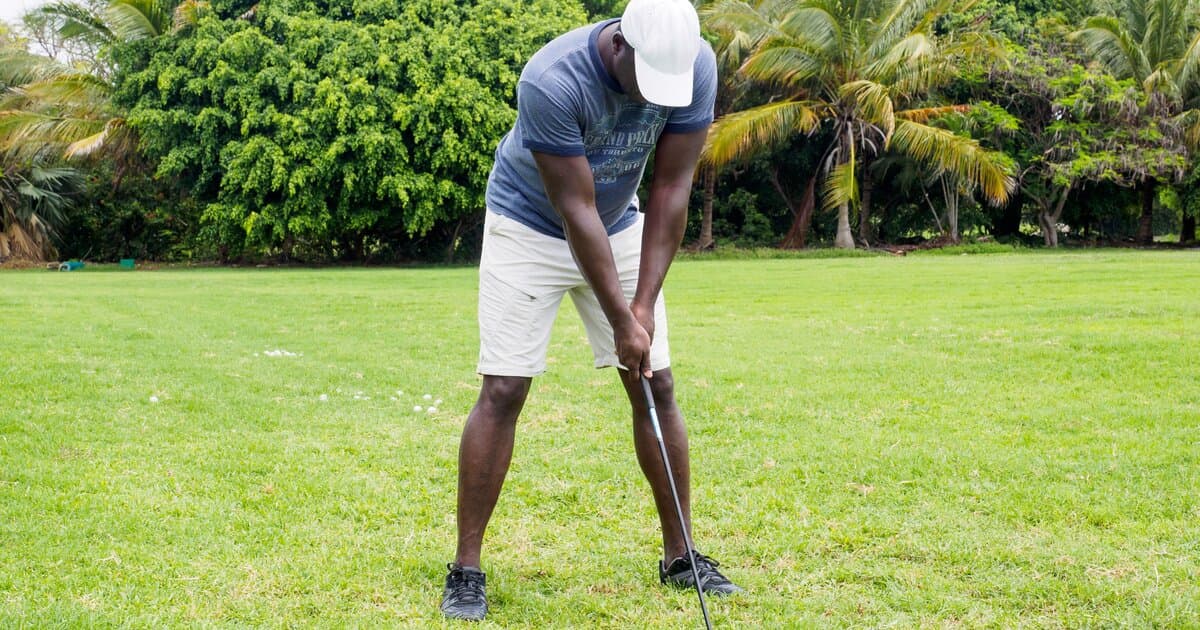
Ask most amateur golfers what the difference between a chip and a pitch is and you'll get a confident answer that turns out to be wrong. Some think a chip is just a small pitch. Others assume they're the same shot played with different clubs. The confusion costs shots because the two shots need different setups, different swings, and different clubs, and using the wrong one in the wrong situation almost always ends badly.
Chipping and pitching are the two most important scoring skills after putting. Get the distinction right and you'll stop wasting shots around the green, stop leaving yourself impossible up-and-downs, and start hitting the fringe or the green far more often. The rule is simple once you understand it: chips run, pitches fly.
Straight to the Pin
A chip is a low, running shot played from close to the green - short air time, long roll. A pitch is a higher shot played from further out - long air time, short roll. Use a chip when you have plenty of green to work with and no obstacles between you and the hole. Use a pitch when you need to carry the ball over rough, a bunker, or a slope, and you don't have much green to run out. Chips use a small stroke and less-lofted clubs (8 or 9 iron). Pitches use a bigger swing and lofted wedges (52-60°). If your short game is inconsistent, a short-game lesson with a PGA pro will fix your decision-making faster than any drill.
The Core Difference
A chip and a pitch are separated by two things: air time and clubface loft.
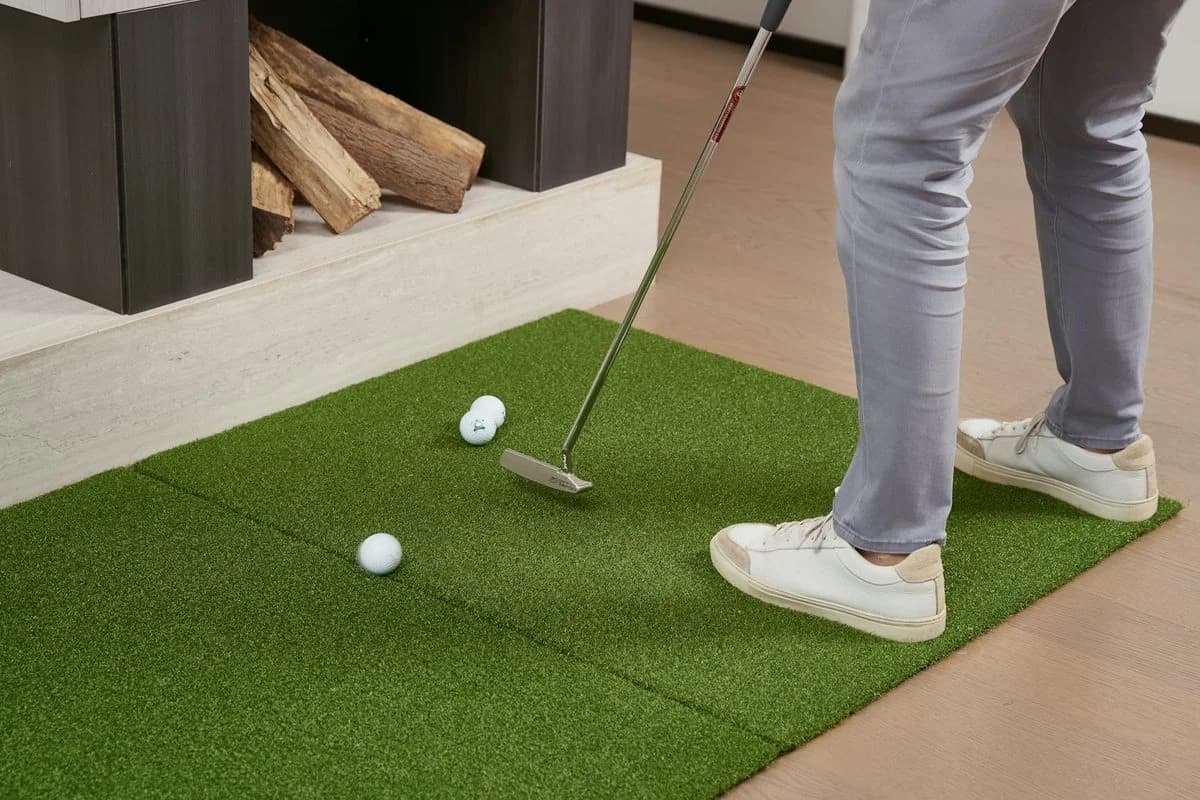
Chip shot
- Low ball flight - the ball spends a short time in the air
- Long roll - most of the distance covers on the ground
- Small, wrist-free stroke
- Less-lofted clubs (7, 8, 9 iron, or a pitching wedge)
- Ratio: roughly 1 part air, 3 parts roll
Pitch shot
- High ball flight - the ball spends a long time in the air
- Short roll - stops fairly quickly on the green
- Larger swing with wrist hinge
- Lofted wedges (52°, 56°, 58°, 60°)
- Ratio: roughly 3 parts air, 1 part roll
Think of it as the difference between rolling a ball along the ground and lobbing it through the air. Both get to the same target, but one is far more predictable when the ground is doing most of the work.
When to Chip
Chip when the situation gives you plenty of ground to work with:
- You're within 20 yards of the green with a clean lie
- The pin is not tight to your edge - you've got green to run the ball out
- No obstacles between you and the hole (no bunker, no water, no thick rough)
- The lie is tight or bare - a chip is much easier to strike from tight ground than a pitch
Why chipping works when you can use it Ground contact is more predictable than air. A ball rolling toward the hole responds to slope and grass grain in ways you can read. A ball flying through the air is subject to spin, wind, and landing bounce - all harder to predict. The lower you can keep the ball, the fewer variables you're dealing with.
When to Pitch
Pitch when you need the ball to stop quickly, or when you have to fly it over something:
- You're 20-50 yards from the green
- There's a bunker, water, or thick rough between you and the pin
- The pin is tucked close to your side of the green with no room to run the ball out
- The lie is fluffy grass that lets you slide a wedge under the ball
- You're playing to a firm, fast green that would run a chip past the hole
Why pitching is harder Pitches require more speed, a bigger swing, and a cleaner strike. There's more that can go wrong - fat, thin, ballooned, or short. But sometimes it's the only shot the situation allows.
The Chip Shot Setup
Compact, stable, minimal moving parts.
Ball position: back of centre, towards the trail foot Stance: narrow, feet close together Weight: 60-70% on the lead foot Hands: ahead of the ball, shaft leaning towards the target Grip: normal grip, slightly gripped down on the shaft for control Club: 7, 8, or 9 iron for most standard chips
The setup pre-loads a descending strike. From here, the stroke is a shoulders-and-arms rock, no wrist hinge, small backswing, accelerating through the ball. See our how to chip a golf ball tip for the full step-by-step.
The Pitch Shot Setup
Slightly wider, less pre-loaded, more room for a full swing.
Ball position: middle of stance, or slightly forward of centre for higher shots Stance: shoulder-width apart, but slightly open to the target line Weight: 55-60% on the lead foot - less lead-side bias than a chip Hands: level with or very slightly ahead of the ball Grip: normal grip, hold the club fully rather than gripping down Club: 52-60° wedge depending on how high you need it to fly
The pitch swing includes wrist hinge, a bigger backswing (hip-high or higher), and a full follow-through. See our how to pitch a golf ball tip for the mechanics.
Note
The biggest mistake amateurs make: reaching for a sand wedge and trying to pitch every shot around the green. A sand wedge is the hardest club in the bag to strike cleanly from tight lies. When in doubt, take less loft and chip.
Decision Framework: Which Shot to Play
Walk up to your ball and ask three questions in order:
1. Can I run the ball along the ground? Look at the green between you and the hole. Is it clear? Is there enough green to let the ball roll out? If yes, chip. If no, move to question 2.
2. Does the situation force me to carry an obstacle? Bunker, water, thick rough, or a mound between you and the hole? If yes, pitch. If no, move to question 3.
3. How much green do I have? More than 15 feet of green between your landing spot and the hole - chip. Less than 15 feet - pitch. This is the trickiest one to judge. When in doubt, err towards the chip because it's the easier shot to control.
Bonus rule: from a tight, bare lie, always chip if you possibly can. Pitches from bare lies punish you when they don't come off cleanly.
Common Mistakes
Chipping when a pitch is needed A low chip over a bunker either clips the top of the bunker or comes up short. If the shot needs air, use loft.
Pitching when a chip would be safer A fluffed pitch from 10 yards out costs a full stroke every time. If you can roll it, roll it.
Using the same club for every shot Amateurs who pick up a sand wedge for every shot around the green are giving themselves the hardest possible shot every time. Swap clubs based on the situation - a pitching wedge, 9 iron, or 8 iron will save shots week in and week out.
Decelerating on either shot The most common short-game fault. A tentative swing at either shot produces heavy or thin contact. Accelerate through the ball on both. Shorter backswing, longer follow-through.
The 3:1 Rule (For Chip Selection)
A useful rule of thumb for club selection in a chip: the ball should carry roughly one third of the distance and roll two thirds.
- 20 feet to the flag, 15 feet of green to work with: land the ball 5 feet on the green with a 9 iron or PW - it'll roll the remaining 15 feet
- 30 feet to the flag, 25 feet of green: land it 10 feet on and let it roll 20 feet - reach for an 8 iron
- 10 feet to the flag, 8 feet of green: land it 3 feet on - use a lofted wedge because there's barely room to run out
The point is not to memorise the numbers, but to shift your thinking from "which club goes 10 yards" to "how much do I need to carry vs how much do I need to roll." Once you think in those terms, club selection becomes obvious.
Three Drills to Improve Both
Drill 1: The three-club chip Take your 7-iron, 9-iron, and pitching wedge to the practice green. From the same spot, chip three balls with each club. Aim at the same hole every time. Watch how differently each ball flies and rolls. This teaches you the range of each club and stops you defaulting to a wedge for everything.
Drill 2: Land-spot practice Instead of aiming at the hole, pick a spot on the green where you want the ball to land - typically about one third of the way to the flag for a chip, closer to the flag for a pitch. Focus on landing the ball on that spot. Your distance control improves dramatically because you're focused on carry, not total distance.
Drill 3: Random-lie chipping Chip from a fringe, a first cut, a tight lie, a downhill lie, and a fluffy lie - all in the same practice session. Each lie changes the shot. This is what the course actually asks of you, and it's a far better use of ten minutes than hitting fifty perfect chips from the same flat spot.
When to Get a Lesson
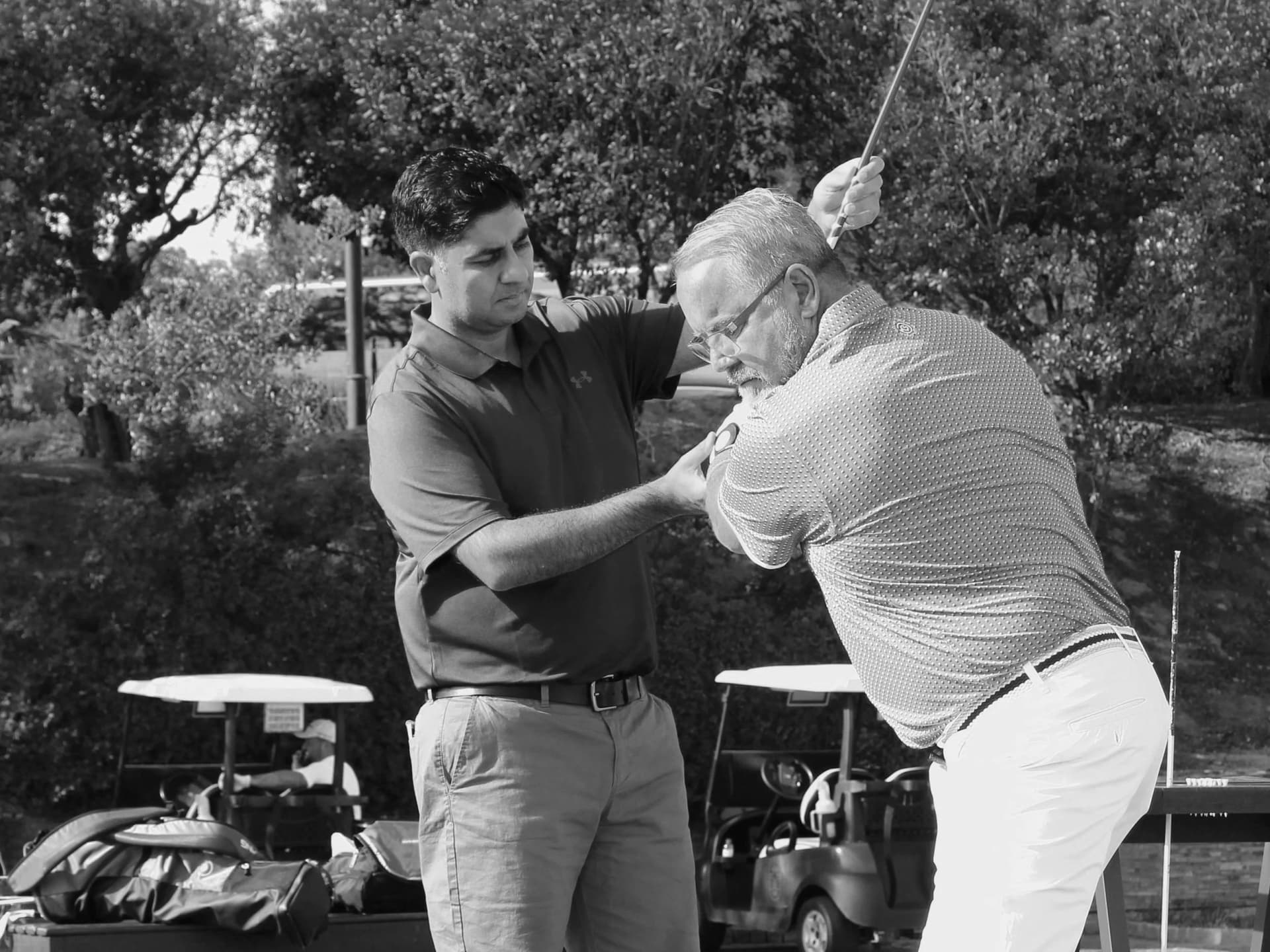
Short game technique is one of the areas where a PGA pro can make the biggest difference in the shortest time. Decision-making, setup, and strike quality are all visible in a few shots on video and correctable in one session. If you're leaking three or four shots per round inside 50 yards, a short-game lesson pays for itself the next time you play.
Browse short game lesson vouchers or use our Gift Finder to find the right lesson type for your game.
See also: how to chip a golf ball, how to pitch a golf ball, how to improve your short game, how to hit out of a bunker.
Founder & Tour Professional
Sandeep Grewal is a former tour professional and the founder of Swyng. He personally handles every booking and redemption.
About Sandeep