How to Play Golf in the Wind: Shot-Making and Strategy

Wind is a defining feature of links golf and a regular companion on any exposed UK course. Most amateur golfers treat it as an inconvenience and try to overpower it. The players who manage their game well in wind understand that adapting is the skill - not fighting back.
Straight to the Pin
The skill in wind is adapting, not overpowering. Read the wind off the flag and a pinch of grass, then take one extra club per 10mph into a headwind (one less downwind) and swing at 80% for a lower, lower-spin flight, ball back a touch, gripped down, with an abbreviated finish. Add bump-and-runs and playing to the fat of the green for course management. Learning to control trajectory takes practice, and a playing lesson with a PGA pro in real conditions is the most efficient way to build punch shots and knockdowns.
Reading the Wind Before You Play
Before you even address the ball:
- Look at the trees and flag - the flag shows wind at green level, which is often different from what you feel at your feet in a valley or dip
- Throw a little grass - releasing a pinch of grass from head height shows wind direction accurately
- Check the clouds - their movement gives you the broad direction if nothing else is clear
Knowing the wind direction relative to each hole changes how you approach the entire round. A course map or a quick walk of the first few holes helps you anticipate rather than react.
Into the Wind
The goal into a headwind is a controlled, lower ball flight with less spin. Higher spin means more ballooning, which can cut your carry significantly.
Club selection: Add one club per 10mph of headwind. In a 20mph headwind, that's typically two extra clubs.
The technique:
- Play the ball slightly back in your stance - one ball-width back from your normal position
- Grip down an inch on the club
- Make an abbreviated, three-quarter backswing with a smooth tempo
- Keep the finish lower than normal - resist following through high
Top Tip
The phrase "swing easy, hit hard" applies most to headwinds. Trying to muscle the ball further into a 25mph wind adds backspin and sends it ballooning skyward. A smooth 80% swing with one extra club goes further every time.
Downwind
A tailwind is a gift, but it changes your approach to the green considerably:
- The ball carries further but lands with less spin - it will run more
- Factor in the extra run when selecting a landing spot
- The ball will also sit up in the wind, making it feel lighter off the face
Club selection: Subtract one club per 10mph of tailwind. Let the wind do the work.
Approach shots: Aim shorter of the flag and land on the front of the green. Trying to carry it to the flag downwind usually runs through the back.
Crosswinds
Crosswinds offer two approaches:
Shape the ball into the wind: Curve a fade into a right-to-left wind so the wind straightens it. This is the tour-player approach - the wind reduces the curve and you end up with a straighter, more controlled shot.
Play the curve with the wind: Aim left and let the left-to-right wind move the ball. This gives more curve and less control - the wind amplifies the shape - but is simpler for most club golfers.
Choose based on your ability to control ball flight. If you can't reliably shape the ball, aim into the wind and let it bring the ball back - this at least keeps you on the short side of the green.
Putting in the Wind
Strong wind affects putting more than most golfers account for:
- A crosswind on a long putt will push the ball off line - factor a slight lean into your read
- In a headwind, the ball rolls slower; into a tailwind, it runs further
- Widen your stance for more stability over longer putts in strong gusts
Course Management in Wind
- Take the aggressive line in crosswinds with the wind behind you, the conservative line into the wind - this is when mistakes are amplified
- Use bump-and-run approaches when the wind is strong - low shots skip under the wind and land with predictable run
- Play to the fat part of the green - in wind, the middle of the green beats a pin-hunting attempt that bounces off short in a gust
Get Coaching on Ball Flight
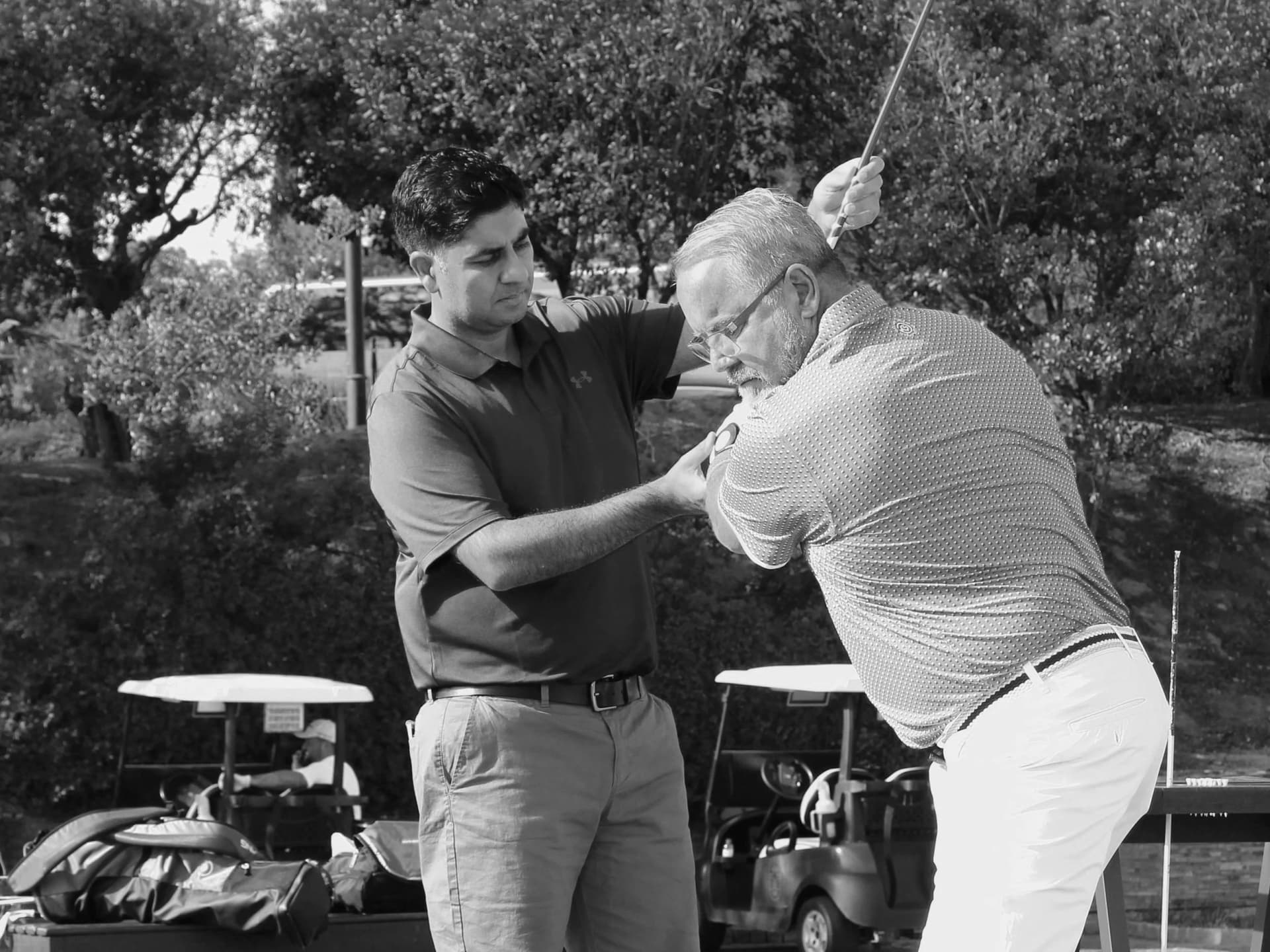
Learning to control trajectory - punch shots, knockdowns, shaped ball flights - pays enormous dividends in UK conditions. A playing lesson with a PGA professional in actual conditions is the most efficient way to develop this.
Browse Browse Our Gift Vouchers or use our Gift Finder.
See also: how to read a golf course, how to improve your golf swing, golf etiquette for beginners.
Frequently asked questions
How many extra clubs should I take into the wind?
A general rule is one extra club for every 10mph of headwind. In a 20mph headwind, take two extra clubs. Into a strong 30mph wind, you might hit a 5-iron where you'd normally hit a 9-iron. With a tailwind, go one club less for every 10mph.
Should I swing harder in the wind?
No - swinging harder increases spin, which amplifies the wind's effect on the ball. In wind, swing at 80% of your normal effort and focus on a controlled, low-ball flight. A smooth, abbreviated swing beats a hard one every time.
What does 'grip it and rip it' actually mean in links conditions?
It's largely a myth for most players. Links veterans play within themselves in wind - controlled ball flights, bump-and-runs, and course management are what scores on an exposed course, not aggressive power plays.
Founder & Tour Professional
Sandeep Grewal is a former tour professional and the founder of Swyng. He personally handles every booking and redemption.
About Sandeep