Golf for Senior Golfers: How to Keep Playing Well as You Age
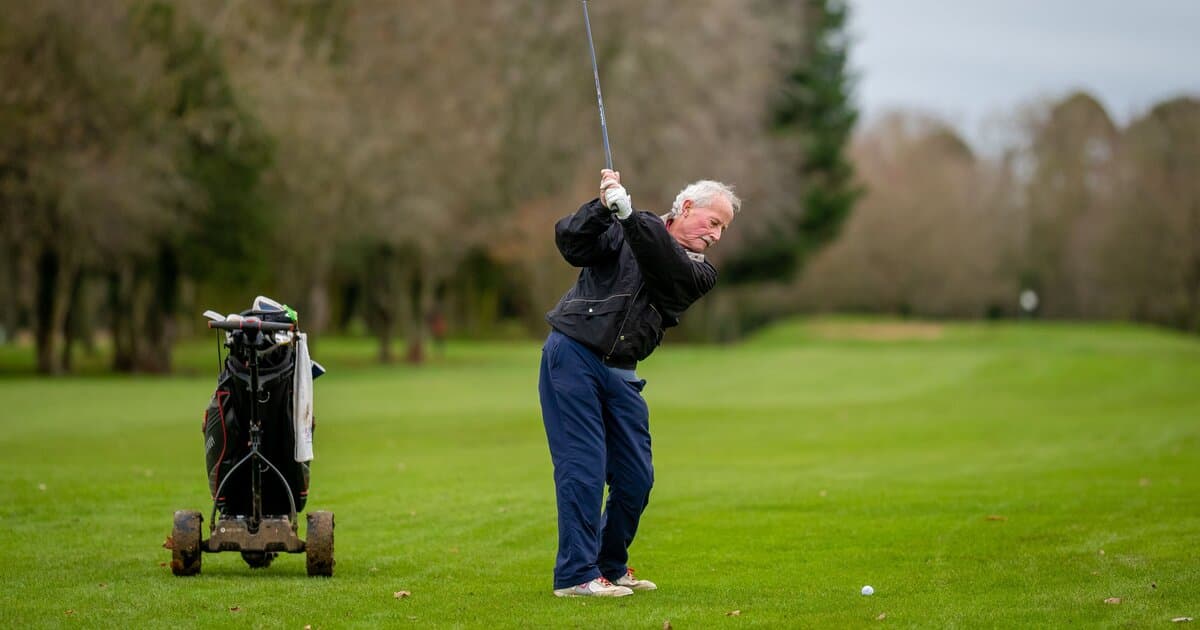
Golf is one of the few competitive sports you can play well into your 80s. Rounds shared with friends and family, courses walked at your own pace, and shots that still feel great when you catch them properly are all reasons golfers stay with the game long after other sports have been abandoned. The scoring may change with age, but the pleasure of the game does not.
What does change is what your body can physically do. Mobility, flexibility, and rotational speed all naturally decline over time, and the traditional golf swing many of us learned in our 30s and 40s begins to feel harder, less comfortable, and less effective. The good news: the swing does not need to stay the same. A few adjustments to setup, equipment, and technique can preserve distance, cut down on injuries, and keep the game fun for decades.
Straight to the Pin
For senior golfers, the goal is a shorter, wider, less rotational swing that saves the back and hips. Setup: stance slightly wider for stability, feet flared out to help rotation, grip slightly stronger to combat slice. Swing changes: three-quarter backswing, feet planted less firmly so the trail heel can lift naturally, and weight fully into the lead foot at the finish. Equipment: higher-lofted driver (12° or more), regular or senior flex shafts, and hybrids replacing long irons. A lesson focused specifically on the senior swing pays for itself in preserved distance and injury-free rounds.
What Actually Changes with Age
Understanding what changes and why makes it easier to adjust.
Rotational mobility The ability to turn the shoulders 90° at the top of the backswing while the hips resist. This is the first thing to go - usually starting in the 50s. Without it, the arms take over the swing and distance drops.
Hip and thoracic flexibility Restricted hip rotation makes it hard to clear through impact. Stiff thoracic spine (the mid-back) limits shoulder turn. Both make the swing shorter and more arms-dependent.
Balance and stability Slightly reduced balance affects how confidently you can shift weight during the swing. Not a large change for most, but enough to matter.
Muscle mass and speed Muscle mass declines by 3-8% per decade after 30, accelerating after 60. Fast-twitch fibres - responsible for peak swing speed - decline faster than slow-twitch. Real, measurable, and unavoidable without some form of resistance training.
Recovery time The body needs longer to recover between rounds. What used to be four rounds a week at 40 might be two at 65. This is not a decline in performance so much as a change in scheduling.
None of these are catastrophic. All of them can be worked with.
Setup Adjustments for Senior Golfers
Small changes to setup make a big difference to comfort and consistency.
Stance width Slightly wider than shoulder-width for full shots. A wider base helps balance and reduces the amount your body needs to rotate to stay stable.
Feet flared out Point both feet outward slightly - trail foot maybe 20° from square, lead foot slightly more. This makes it easier to complete a full backswing without straining the trail hip, and to rotate through impact without twisting the lead knee.
Grip pressure Lighter, not tighter. Aim for 4 out of 10. Tight grip pressure limits wrist speed and adds tension through the arms - both cost distance.
Grip position A very slightly "stronger" grip (rotate both hands slightly clockwise for a right-handed golfer, so you see three knuckles on the lead hand). This helps square the clubface at impact and combats the slice most amateurs develop as swing speed slows.
Ball position Slightly forward of what you used at 40, especially with the driver. A forward ball position lets you catch the ball on a slight upswing, which promotes higher launch and more carry - critical when you can't generate the ball speed of a younger swing.
Swing Adjustments
The three-quarter backswing The most important change. Instead of trying to force a full shoulder turn that your body no longer allows, deliberately shorten the backswing to three-quarters. Aim for a swing that ends with the club just short of parallel at the top. Balance, tempo, and control all improve. Distance loss is usually minimal because the swing that felt like "full" at 65 was probably closer to three-quarter anyway - you were fighting the position rather than owning it.
Let the trail heel lift If your hips no longer rotate freely, allow the trail heel to lift off the ground at the top of the backswing (as Jack Nicklaus did throughout his career). This restores rotational range for the shoulders without straining the hip. Replant the heel to start the downswing. This one adjustment saves many golfers from back pain.
Sequence the downswing from the ground up This is more important as you age, not less. The lead foot re-plants first, hips rotate, arms follow, club last. Skipping this sequence and firing with the arms puts enormous strain on the lower back - which is exactly the injury most older golfers dread.
Complete the finish Full turn to a balanced finish, weight fully into the lead foot, belt buckle facing the target. A committed finish tells you the swing sequence was correct. A cut-off finish (weight staying back, chest facing right of target) means the arms did the work.
Note
The single most valuable idea for senior golfers is that you don't need to swing like a 25-year-old to score like one. Approach shots hit shorter but with the right club selection still find the green. Pin-high wins holes regardless of what club you hit in.
Equipment That Actually Helps
The right equipment can add 20 yards without changing your swing. Wrong equipment can cost 20 yards no matter how well you swing.
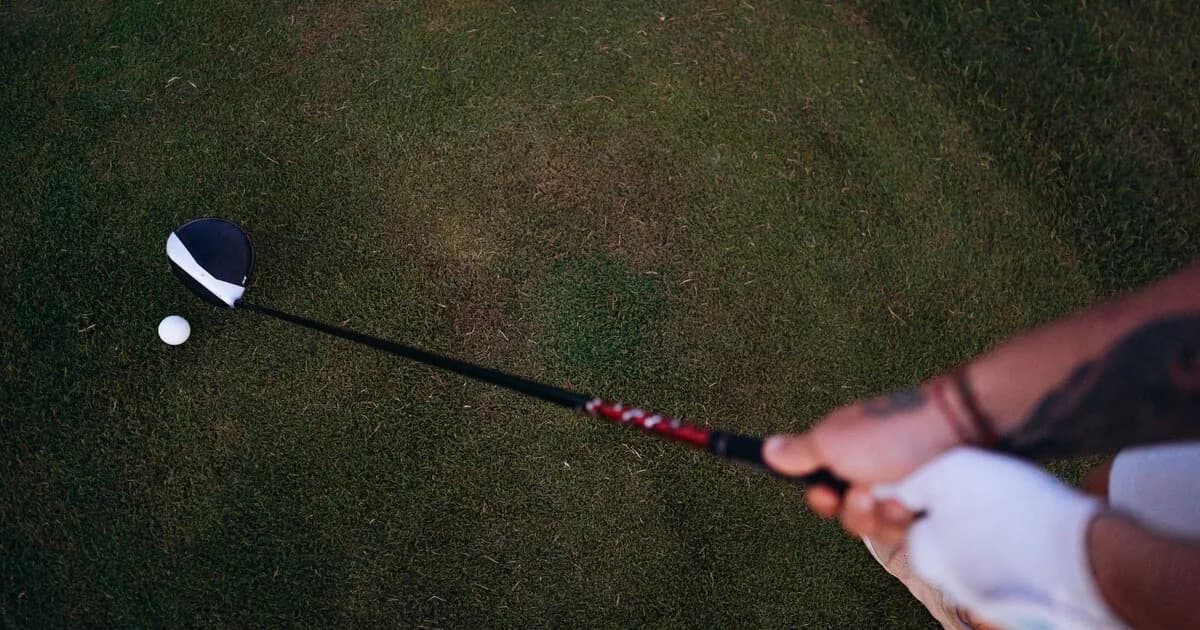
Driver loft If your driver is 9° or 10.5°, and you're over 60, you're almost certainly under-lofted. Try a 12° or even 13.5° driver. Higher loft launches the ball higher, generates less spin, and carries further at slower swing speeds. This is not a beginner concession - it's the correct physics for a swing under 90 mph.
Shaft flex Regular or senior flex is right for the vast majority of amateur men over 60, and light or ladies flex for many women. A stiff shaft you handled at 50 is very likely costing you distance now. If you don't know, ask any club fitter - a five-minute launch monitor test tells you exactly what's happening.
Hybrids instead of long irons Replace the 3, 4, and 5 irons with hybrids. The rounded soles glide through the turf, the low centre of gravity launches the ball higher, and they cut through rough where long irons stall. Every senior golfer we know who has done this reports gaining distance and consistency at the same time.
A 7-wood One of the most underrated clubs for senior golfers. Higher-launching than a 3-hybrid, longer than a 5-wood in most bags, and much easier to hit than a 3-iron ever was. Consider carrying one in place of a 3-wood if you struggle to launch the 3-wood from the ground.
Lighter grips Larger, softer grips reduce grip pressure and are kinder on arthritic hands. Not a myth - they help.
A trolley or push cart Sounds obvious but many senior golfers still carry when they'd play better fresher. Fatigue costs shots. Every.
Fitness for Older Golfers
You cannot completely stop the ageing process, but you can slow it dramatically. The three things that make the biggest difference:
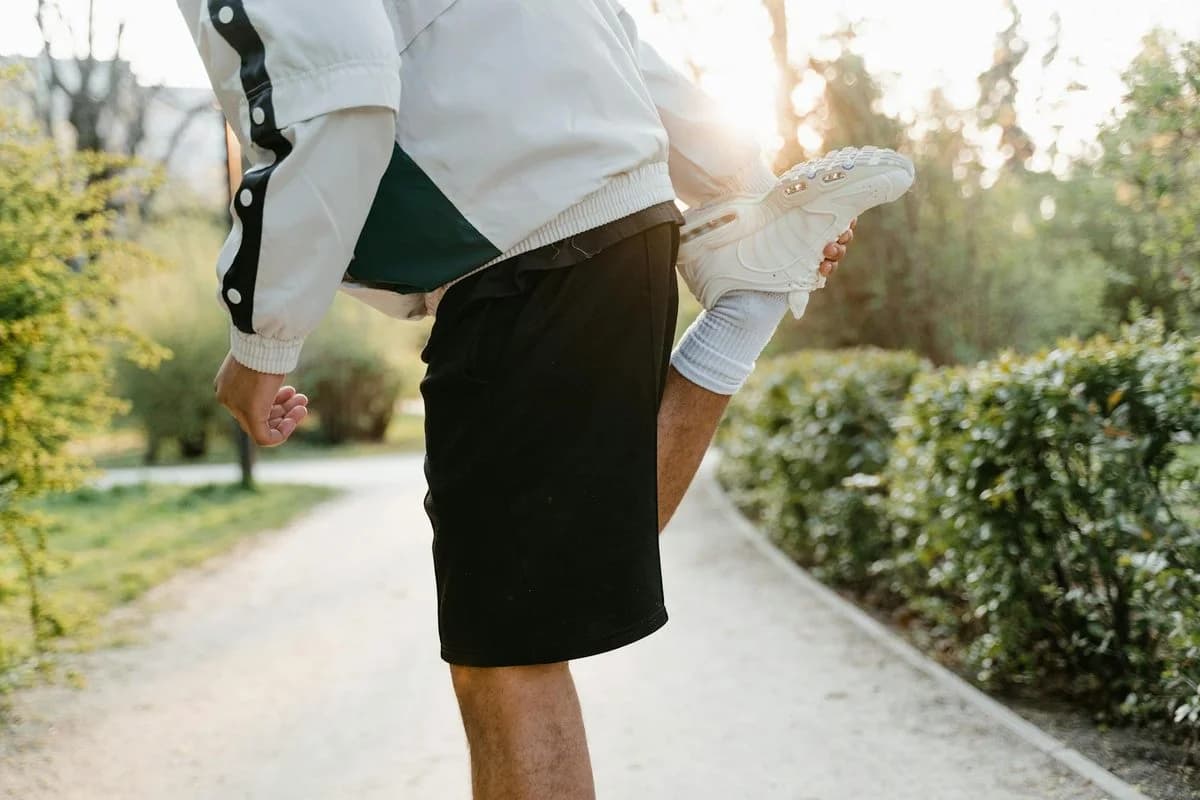
Thoracic mobility Five minutes a day of seated spinal twists, cat-cow stretches, and open-book rotations restore shoulder turn faster than most people realise. Even a couple of weeks of consistent work adds visible range.
Hip mobility 90/90 hip stretches, figure-four glute stretches, and standing lateral leg swings keep hip rotation available. Ten minutes twice a week is enough.
Basic resistance training Two 30-minute strength sessions per week - bodyweight squats, glute bridges, rows, presses - slow the loss of muscle mass and maintain fast-twitch fibres. This is not about becoming an athlete. It's about staying strong enough to swing a golf club at speed.
None of this requires a gym. All of it can be done at home in less time than most people spend on their phone before breakfast.
When to Have a Lesson
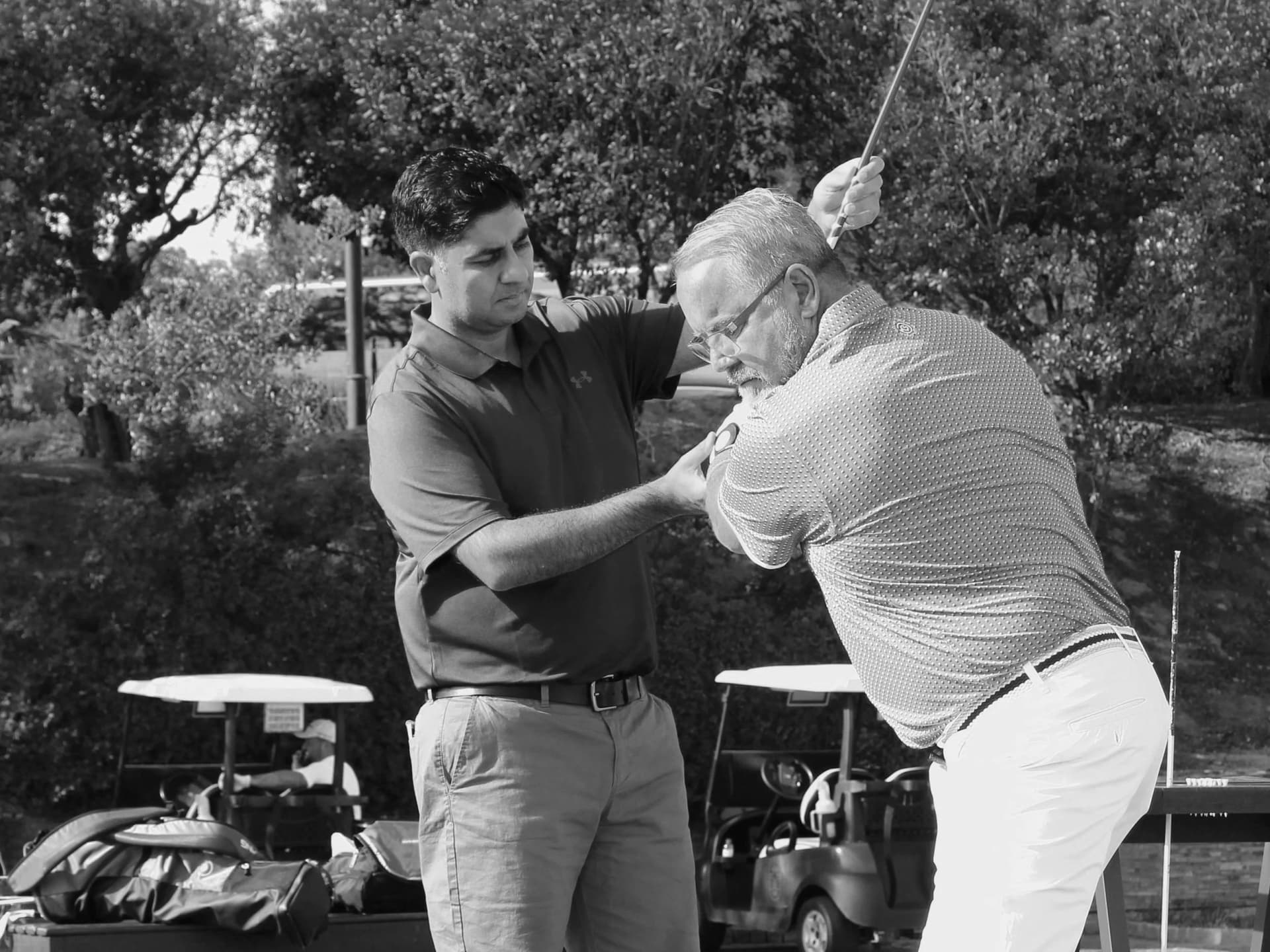
A single lesson from a PGA pro focused specifically on the senior swing is one of the best investments in golf. Many pros now specialise in this - some by choice, some because it's a growing part of their client base. They know exactly which adjustments preserve distance and which cause injuries.
Ask specifically for a lesson that covers:
- Setup adjustments for reduced mobility
- Three-quarter swing technique
- Trail heel lift and hip rotation
- Equipment recommendations (loft, flex, wedge setup)
Browse golf lesson vouchers or use our Gift Finder to find the right lesson type. Playing lessons are especially valuable for senior golfers because they cover course management as well as technique.
The Best Golf You'll Ever Play
Many senior golfers report playing their most enjoyable golf after 60 - not their longest, but their most rewarding. Course management improves with experience. Short game skills develop from necessity. And the pace, camaraderie, and rhythm of the game become the point rather than the score.
If you're looking for something to look forward to, our Ultimate Scottish Round hand-picks legendary courses across Scotland for milestone rounds - a proper trip with proper courses, arranged so all you have to do is turn up and play.
See also: how to add distance to your golf swing, how to hit fairway woods and hybrids, golf fitness exercises, getting back into golf.
Founder & Tour Professional
Sandeep Grewal is a former tour professional and the founder of Swyng. He personally handles every booking and redemption.
About Sandeep