How to Choose Golf Clubs for Beginners: A Practical Guide
Walk into a golf shop as a beginner and the sheer number of choices is overwhelming. Drivers, irons, wedges, putters - each with dozens of options at wildly different price points. The good news: you don't need to understand all of it. You just need to know what to buy (or borrow) to get started.
Straight to the Pin
Don't buy a full set until you've had a lesson, then look for a forgiving starter set of 11 to 12 clubs, graphite shafts for slower swing speeds, and game-improvement irons over harder-to-hit player's irons. Spending under £300 is plenty as a beginner, second-hand sets are a smart buy, and it's worth taking your time over the putter since it's around 40% of your shots. A beginner coaching package with a PGA pro lets a coach assess your swing first, so you buy the right clubs once rather than twice.
First: Don't Buy Clubs Until You've Had a Lesson
This is the single most common beginner mistake. Buying a full set before you've played is like buying running shoes before you know your gait. You could spend hundreds of pounds on clubs that don't suit you at all.
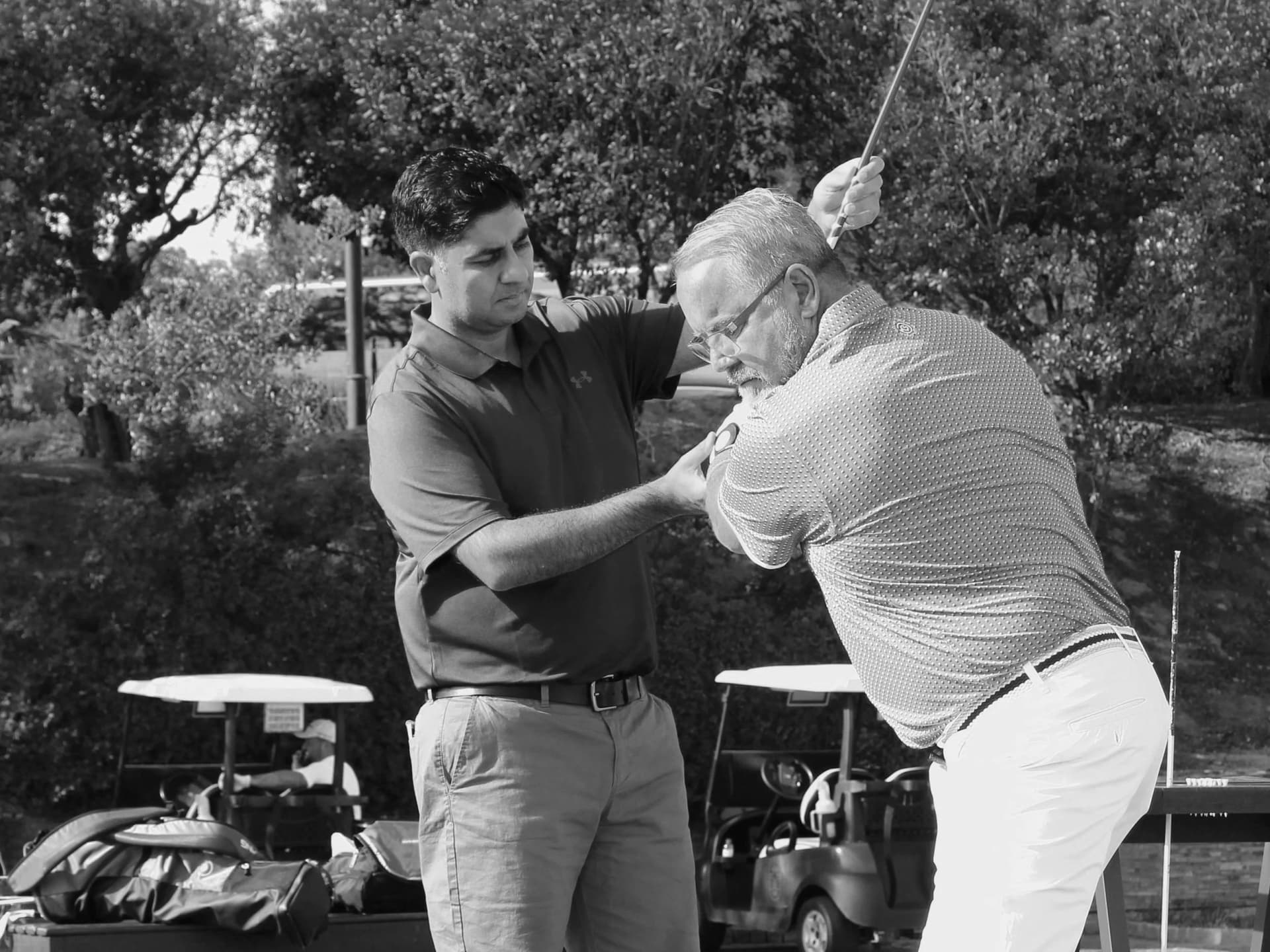
Take a lesson or two first. Your PGA coach will watch you swing, assess your tempo and build, and tell you exactly what to look for.
Top Tip
Many Swyng lesson packages include equipment hire. You can try different clubs before committing to anything. Browse options at swyng.co.uk.
What Clubs Do You Actually Need?
The rules allow 14 clubs in a bag. As a beginner, you need far fewer. A starter set typically includes:
- A driver (for tee shots on longer holes)
- A 3-wood or 5-wood (fairway shots and long tee shots)
- A hybrid (easier to hit than long irons)
- Irons: 6, 7, 8, 9 (mid to short irons)
- A pitching wedge (short approach shots)
- A sand wedge (bunkers and short pitches)
- A putter
That's 11 or 12 clubs - more than enough. Many beginner sets come pre-configured like this, which is exactly why starter sets make sense.
Men's vs Women's Clubs
Women's clubs typically have lighter shafts, more flex, and are slightly shorter. They're designed for slower swing speeds. If you're a woman with a naturally fast swing, standard men's clubs may actually suit you better - another reason to get assessed before buying.
Steel vs Graphite Shafts
Graphite shafts are lighter and better for slower swing speeds - most beginners, all women's clubs, and senior players.
Steel shafts are heavier, more consistent, and preferred by players with faster swing speeds.
For most beginners, graphite irons are forgiving and easier to swing. As your game develops you may switch, but don't let this detail slow you down.
What Does "Forgiving" Mean?
You'll see this word everywhere. A forgiving club has a larger sweet spot - meaning off-centre hits still travel a reasonable distance in a reasonable direction. Beginners make a lot of off-centre contact, so forgiveness matters a lot early on.
Game-improvement irons (the right choice for beginners) are wider, with more weight around the perimeter. Player's irons (slim, compact, preferred by better golfers) are less forgiving and harder to hit. Avoid them until you're scoring consistently.
Budget: What Should You Spend?
| Budget | What to buy |
|---|---|
| Under £100 | Second-hand starter set from eBay or a charity shop - perfectly fine for a first year |
| £150-£300 | New entry-level set (Callaway Edge, Wilson Staff, Cleveland) - solid quality |
| £400-£700 | Mid-range set with better components - worth it if you know you'll stick with the game |
| £700+ | Unnecessary until you're consistently breaking 90 |
There is no advantage to spending £1,000 on clubs when you're a beginner. The expensive set won't fix a swing that's still developing.
Buying Second-Hand
Second-hand clubs are an excellent choice for beginners. Golf clubs last a long time - a set of irons from five years ago that's been well maintained will perform just as well as a new mid-range set today.
Check:
- No cracks in the clubhead or hosel
- Grips aren't worn smooth (they can be replaced cheaply)
- Shafts aren't bent or rusted
eBay, Facebook Marketplace, and golf club pro shops all sell used sets.
The Putter: Take Your Time
Putting accounts for around 40% of your shots in a round. Spend a bit of time on a putter before committing. Visit a shop and putt a few balls - the one that feels most natural to you is the right one. Blade or mallet, face-balanced or toe-weighted - forget the technical terms and just putt.
When to Upgrade
Upgrade your clubs when:
- You're playing regularly (at least once a fortnight)
- You've had lessons and your swing is becoming consistent
- You know what your misses are (a fade, a draw, a tendency to thin the ball)
At that point you can make informed choices. Until then, any decent forgiving set will do the job.
Ready to book your first lesson and find out what suits your swing? Browse beginner golf experiences at swyng.co.uk.
Founder & Tour Professional
Sandeep Grewal is a former tour professional and the founder of Swyng. He personally handles every booking and redemption.
About Sandeep