
How to Stop Topping the Ball: Simple Fixes for a Common Fault
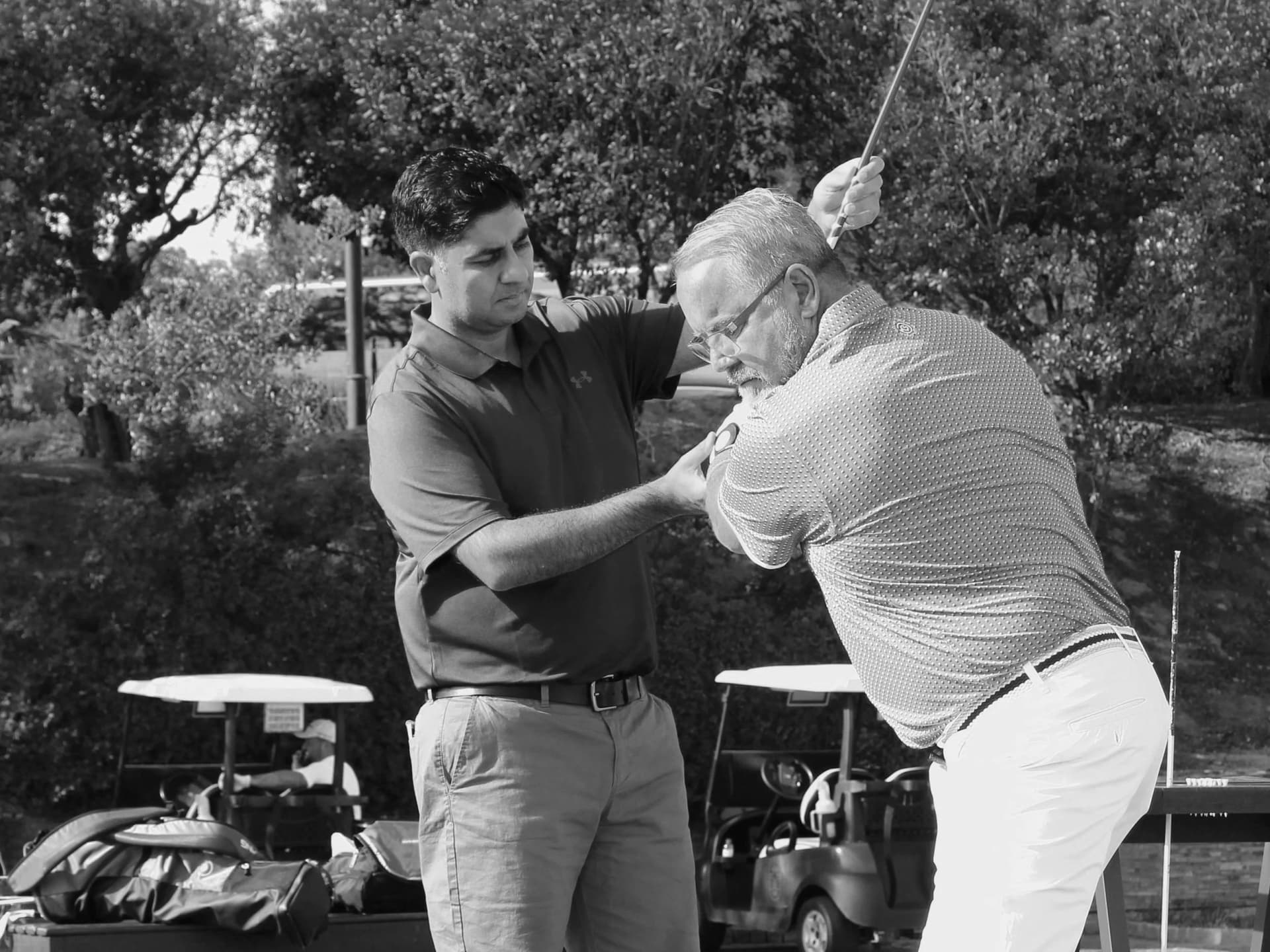
There is nothing more frustrating than a topped shot
You stand over the ball with a clear picture of the shot you want to hit. You swing. And instead of the ball soaring toward the green, it dribbles along the ground 30 yards in front of you, barely getting airborne. The topped shot is one of the most demoralising faults in golf, and it plagues golfers of all levels, from beginners to experienced players going through a rough patch.
The good news is that topping is almost always caused by a small number of identifiable faults. Fix the root cause, and the problem disappears quickly.
Straight to the Pin
You top the ball when the club's low point sits too high. The common fixes: maintain your spine angle and stop standing up, check your ball position for each club, stop scooping and hit down to let the loft work, set up with proper posture, and swing at 80% effort. The tee peg drill trains the right low point. If the fault keeps coming back, an hour with a PGA professional will spot which one applies to your swing.
What causes you to top the golf ball?
Topping happens when the leading edge of the club strikes the top half of the ball instead of the bottom. Instead of compressing the ball against the turf and launching it upward, the club catches it too high, sending it scurrying along the ground.
The fundamental issue is that the club's low point is too high. The clubhead is not reaching down to where the ball is sitting. Several common faults produce this result.
Are you lifting your body during the swing?
This is the number one cause of topping. Lifting your body, often called "standing up" or "early extension," raises the arc of your swing. If your body moves upward during the downswing or through impact, the clubhead travels higher and catches the top of the ball.
How to check for it
Record your swing from a face-on angle (a friend with a phone works perfectly). Watch your head position during the downswing and through impact. If your head moves noticeably upward before you strike the ball, you are lifting.
How to fix it
- Maintain your spine angle throughout the swing. Feel like your chest stays pointing at the ball from address through impact. Do not straighten up until after the ball is gone.
- Keep your knees flexed. Many golfers straighten their legs during the downswing, which pushes the body upward. Maintain the flex you had at address.
- Resist the urge to watch the ball fly. Lifting your head to see the result is one of the most common triggers for standing up. Trust the swing and keep your eyes on the ball's position until well after impact.
Is your ball position wrong?
Ball position is a surprisingly common and easily overlooked cause of topping. If the ball is too far forward in your stance (toward your left foot for a right-hander), the club may be on its upward arc by the time it reaches the ball, catching it thin or on top.
Correct ball position for each club type
- Driver: Opposite the inside of your left heel. The driver is the only club you want to hit on the upswing.
- Fairway woods and hybrids: One to two inches inside your left heel.
- Mid-irons (5 to 7): Centre to slightly forward of centre.
- Short irons and wedges: Centre of your stance.
If you have been placing all your irons opposite your left heel (a common mistake), moving the ball back to the correct position will immediately improve your strike quality.
Are you trying to help the ball into the air?
This is the most counterintuitive cause of topping. Many golfers, particularly beginners, instinctively try to scoop the ball upward by hanging back on their right foot and flipping the wrists through impact. The intention is to lift the ball, but the result is the opposite: the club bottoms out behind the ball, then rises and catches the top of it.
How to fix the scoop
- Trust the loft of the club. Every iron has loft built into the face. A 7-iron has about 30 to 34 degrees of loft. You do not need to add any. Simply striking the ball with a slightly descending blow will launch it perfectly.
- Shift your weight forward. At impact, roughly 70% of your weight should be on your left foot (for right-handers). This ensures the club is still moving downward through the ball.
- Think "down" to go up. Hit down on the ball and the loft does the work of getting it airborne. This is one of golf's great paradoxes, but once you feel it work, it becomes second nature.
Could your posture be the problem?
Poor posture at address sets up many swing faults, including topping. If you are standing too upright or too crouched, your body will compensate during the swing, often by changing its height.
The correct golf posture
- Stand tall with your feet shoulder-width apart.
- Bend from your hips (not your waist) until the club rests comfortably on the ground behind the ball.
- Let your arms hang naturally from your shoulders. There should be a comfortable gap (about a fist's width) between the butt end of the club and your thighs.
- Flex your knees slightly, as if you were about to sit on a tall bar stool.
- Your weight should be balanced between the balls and heels of your feet, with a slight favouring toward the balls.
Check your posture before every round with a simple mirror drill at home. Stand in your address position in front of a full-length mirror and verify these positions.
Are you swinging too hard?
Over-swinging is a frequent contributor to topping. When you swing harder than your body can control, your balance shifts, your timing breaks down, and the club's low point becomes unpredictable.
How to find the right effort level
- Swing at 80% effort. This is the golden rule for consistency. Eighty percent of your maximum effort produces nearly the same distance as 100% but with vastly better contact.
- Focus on rhythm, not speed. A smooth, rhythmic swing keeps your body stable and your club on plane.
- Shorten your backswing if needed. A shorter, controlled backswing is always better than a long, loose one. You will hit it more solidly, which compensates for any marginal distance loss.
What about topping fairway woods?
Fairway woods are the clubs most commonly associated with topping because their longer shafts and lower loft amplify the fault. The same principles apply, but there are a few specific tips for fairway woods:
- Sweep the ball off the turf. Fairway woods are not designed to take big divots. Think of a shallow, sweeping motion that brushes the grass rather than digging into it.
- Do not try to lift it. The low centre of gravity in a fairway wood is engineered to get the ball airborne. Trust it.
- Position the ball slightly forward of centre, but not as far forward as a driver. One to two inches inside the left heel is the guideline.
- Consider a hybrid. If you consistently top your fairway woods, a hybrid with a shorter shaft and higher launch may be a better option for those distances.
Quick drill: the tee peg contact drill
This drill trains you to strike the bottom of the ball consistently.
- Push a tee peg into the ground so that only about half an inch protrudes above the surface.
- Place a ball on the tee.
- With a 7-iron, hit shots focusing on sweeping the tee out of the ground after the ball is gone.
- If you are topping it, the tee will remain in the ground because the club is passing over it.
- Gradually lower the tee until you are hitting quality shots off a virtually flush tee.
- Finally, remove the tee entirely and hit off the grass, maintaining the same feeling.
This drill gives you immediate visual feedback. If the tee comes out, your low point is correct. If it stays put, you need to work on one of the fixes above. Twenty minutes with this drill will improve your ball-striking noticeably.
Get Lessons from a PGA Professional
If you'd like personal guidance on what we've covered, browse golf lesson vouchers across the UK. Redeemable at venues nationwide and valid for 12 months.
Golf Lesson Vouchers
One-to-one lessons with PGA professionals at venues across the UK.


A summary of the key fixes
- Maintain your spine angle and resist standing up during the swing.
- Check your ball position for every club type and move it back if it has crept too far forward.
- Stop trying to scoop the ball. Hit down on it and let the loft do the work.
- Set up with proper posture: hip bend, knee flex, arms hanging naturally.
- Swing at 80% effort for better control and consistency.
- For fairway woods, sweep the ball with a shallow angle of attack rather than trying to lift it.
- Use the tee peg drill to build confidence in your low point and ball-striking quality.
Topping is a fixable fault. Identify which of these causes applies to your swing, work on the specific fix, and the problem will clear up faster than you might expect.
Founder & Tour Professional
Sandeep Grewal is a former tour professional and the founder of Swyng. He personally handles every booking and redemption.
About Sandeep
Explore More Gift Guides
Discover curated golf gift guides for every occasion - from birthdays to retirement and everything in between.
Browse All Guides
