
How to Improve Your Golf Swing Tempo and Rhythm
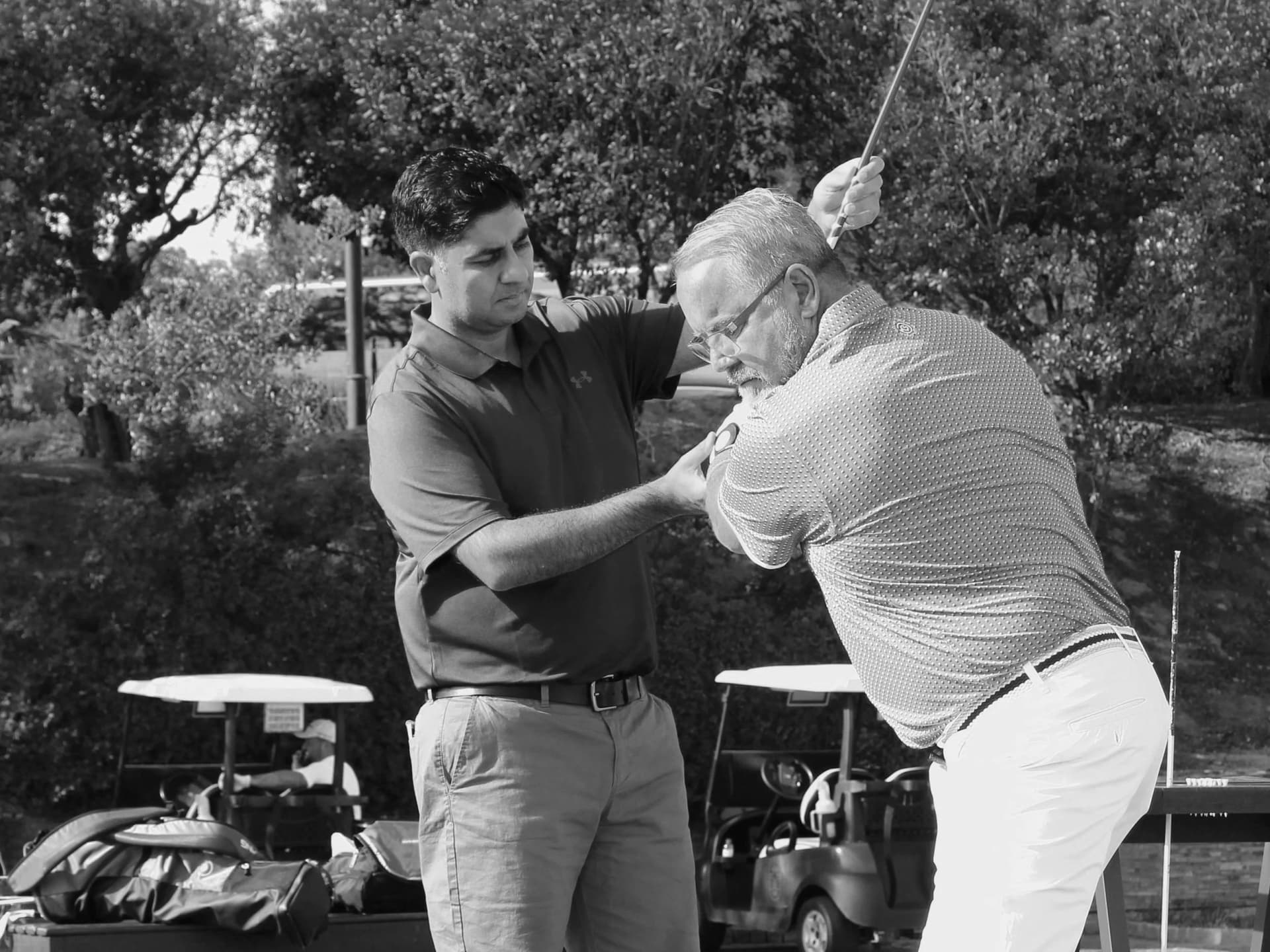

Tempo is the secret ingredient most golfers overlook
Watch any tour professional hit a golf ball and the first thing you notice is how smooth it looks. The swing appears effortless, unhurried, and perfectly balanced. Now watch the average club golfer on the first tee on a Saturday morning. The contrast is striking: rushed backswings, lurching transitions, and finishes that look more like a stumble than a pose.
The difference is tempo. Not swing speed, not flexibility, not hours of practice. Tempo. It is the rhythm and timing of your swing, and it is arguably the single most important factor in consistent ball-striking.
Straight to the Pin
Good tempo is the 3:1 ratio of backswing time to downswing time that nearly every great player shares, regardless of how fast they swing. Most amateur faults come from rushing the transition, snatching the backswing, or decelerating through impact. Fix it by finding a smooth, repeatable pace and drilling it with the feet-together drill, the pause-at-the-top drill, and the metronome method, then hold it under pressure with deep breathing and the cue "smooth". A PGA pro watching your sequence in person can spot exactly where your rhythm breaks down.
What exactly is swing tempo?
Swing tempo is the ratio between the time it takes to complete your backswing and the time it takes to complete your downswing. Research by biomechanist John Novosel, published in his book "Tour Tempo," found that virtually every great player in history shares the same ratio: 3 to 1.
That means the backswing takes three times as long as the downswing. Whether the player swings fast (like Rory McIlroy) or slow (like Fred Couples), the 3:1 ratio holds. The overall speed varies, but the proportion stays remarkably consistent.
For a typical tour pro, this works out to roughly 0.9 seconds for the backswing and 0.3 seconds for the downswing. For club golfers, the total time might be slightly longer, but the 3:1 ratio is still the target.
Why does bad tempo ruin your swing?
When your tempo breaks down, everything else follows. Here is what happens:
Rushing the backswing
A fast, snatchy backswing cuts short your rotation and prevents the club from reaching a proper position at the top. The result is a narrow, incomplete turn that robs you of power and consistency. You end up using your arms and hands to generate speed, which leads to inconsistent strikes.
Rushing the transition
The transition from backswing to downswing is the most critical moment in the golf swing. If you rush it, your shoulders fire first, throwing the club outward onto an over-the-top path. This produces pulls, slices, and weak contact. A smooth transition allows the lower body to initiate the downswing while the club drops into the ideal inside path.
Decelerating through impact
Some golfers, particularly on short shots, slow down through impact because they are afraid of hitting the ball too far. This is just as destructive as swinging too fast. Deceleration leads to thin shots, fat shots, and a general loss of control.
How do you find your ideal swing tempo?
Your ideal tempo is not necessarily slow. Some excellent players have quick tempos (Nick Price, Bryson DeChambeau) while others are notably smooth (Ernie Els, Vijay Singh). The key is finding a pace that feels natural, allows a full turn, and maintains the 3:1 ratio.
Step 1: Establish your baseline
Hit 10 balls with your 7-iron at what feels like your normal pace. Rate each shot for quality of strike. Now hit 10 more at a pace that feels deliberately slower, like 70% of your normal effort. Rate those strikes. Most golfers find that the slower batch produces better contact.
Step 2: Find your comfortable rhythm
The ideal tempo should feel unhurried but not artificially slow. Think of it as the pace at which you could repeat the same swing 50 times without getting tired or losing concentration. If your body is straining or your balance is off at the finish, you are swinging too hard.
Step 3: Lock in the ratio
Once you have found a comfortable pace, focus on the 3:1 ratio. A simple way to feel this is to count: say "one, two, three" during the backswing and "four" at impact. The count should be even and rhythmic, not rushed.
What are the best drills for improving swing tempo?
The feet-together drill
This is one of the most effective tempo drills in golf because it forces you to swing smoothly or you will lose your balance.
- Stand with your feet touching, ball positioned in the centre.
- Using a 7-iron, make half swings, focusing on balance and rhythm.
- Gradually increase the length of your swing while keeping your feet together.
- If you stumble or lose balance, you are swinging too fast. Slow down.
- Hit 15 to 20 balls this way, then return to your normal stance. You will notice your tempo has smoothed out considerably.
The pause-at-the-top drill
This drill addresses the most common tempo fault: rushing the transition.
- Make your normal backswing with a 7-iron.
- At the top of the backswing, pause deliberately for one full second.
- Then complete the downswing smoothly.
- The pause breaks the habit of rushing from backswing to downswing and teaches you to feel the transition as a distinct moment rather than a frantic change of direction.
Start with half swings and build up. The pause will feel exaggerated at first, but the quality of your strikes will improve immediately.
The one-handed swing drill
This drill is excellent for developing feel and rhythm.
- Using a short iron (9-iron or pitching wedge), grip the club with only your lead hand (left hand for right-handers).
- Make smooth, controlled half swings, clipping the ball off the turf.
- The limited strength of one arm forces you to use tempo rather than muscle to generate speed.
- Hit 10 to 15 balls, then switch to your normal two-handed grip. The smooth rhythm tends to carry over.
The metronome method
If you want a precise, measurable approach to tempo, use a metronome app on your phone.
- Set the metronome to 72 beats per minute (a good starting point for most golfers).
- Start your backswing on beat one.
- Reach the top of your backswing on beat two.
- Strike the ball on beat three.
- Adjust the tempo up or down by a few BPM until you find the rhythm that produces your best contact.
This method gives you an external reference point for your tempo, which is particularly useful on the course when nerves or excitement can speed you up.
How do you maintain tempo under pressure?
This is where most golfers struggle. On the range, tempo feels natural. On the first tee with people watching, or over a crucial putt, everything speeds up. Here are strategies that work:
Breathe before you swing
Take one deep breath before you address the ball. Exhale slowly as you set up. This physically slows your heart rate and relaxes the muscles that tense under pressure. It takes three seconds and makes a genuine difference.
Use a consistent pre-shot routine
A pre-shot routine that you repeat before every shot acts as a tempo anchor. It might be one practice swing, a glance at the target, a waggle, and then go. The routine should take the same amount of time whether you are on the practice ground or standing on the 18th tee in a medal. Consistency in your routine breeds consistency in your swing.
Think "smooth" rather than "hard"
When pressure builds, the instinct is to grip tighter and swing harder. Replace that impulse with a single thought: smooth. Say the word to yourself during the backswing. It is a simple mental cue that prevents the adrenaline-fuelled lunge that ruins so many pressure shots.
Does tempo apply to short shots and putting?
Absolutely. In fact, tempo may be even more important in the short game because the margins are smaller.
Chipping and pitching
Short game shots benefit from the same 3:1 ratio. A common fault in chipping is a quick, jabby stroke with no follow-through. Instead, focus on a smooth backswing and an accelerating through-stroke. The length of the backswing controls the distance; the tempo stays constant.
Putting
Great putters have remarkably consistent tempo on the putting green. The stroke is pendulum-like: the same pace back and through, with the length of the stroke determining the distance. Phil Mickelson, one of the finest putters in the game's history, has spoken extensively about the importance of tempo on the greens.
Try this: on the practice green, hit 10 putts of the same length while counting "one" on the backstroke and "two" on the through-stroke. Keep the count even. You will notice your distance control improves immediately.
Quick drill: the swish drill
This drill requires no ball and can be done anywhere.
- Turn your driver upside down so you are holding the clubhead.
- Make full swings, listening for the "swish" sound the shaft makes.
- The swish should be loudest at the bottom of the swing arc, where the ball would be.
- If the swish happens early (on the way down), you are casting from the top and rushing the transition. Slow down the start of the downswing.
- Repeat 20 times, focusing on making the swish as loud as possible at the bottom.
This drill builds speed in the right place (through impact, not from the top) and naturally improves your tempo because you have to sequence the swing correctly to get the loudest swish at the right point.
Get Lessons from a PGA Professional
If you'd like personal guidance on what we've covered, browse golf lesson vouchers across the UK. Redeemable at venues nationwide and valid for 12 months.
Golf Lesson Vouchers
One-to-one lessons with PGA professionals at venues across the UK.


Key takeaways
- Swing tempo is the ratio of backswing time to downswing time. The ideal ratio is 3:1.
- Most amateur faults come from rushing, particularly the transition from backswing to downswing.
- Your ideal tempo should feel smooth and repeatable, not slow or fast in absolute terms.
- The feet-together drill and pause-at-the-top drill are the most effective ways to improve tempo quickly.
- Under pressure, use deep breathing, a consistent pre-shot routine, and the mental cue "smooth" to maintain your rhythm.
- Tempo applies to every shot, including chips and putts. A consistent rhythm improves distance control across your entire game.
Founder & Tour Professional
Sandeep Grewal is a former tour professional and the founder of Swyng. He personally handles every booking and redemption.
About Sandeep
Explore More Gift Guides
Discover curated golf gift guides for every occasion - from birthdays to retirement and everything in between.
Browse All Guides
