
How to Fix a Slice: The Most Common Problem in Golf, Solved
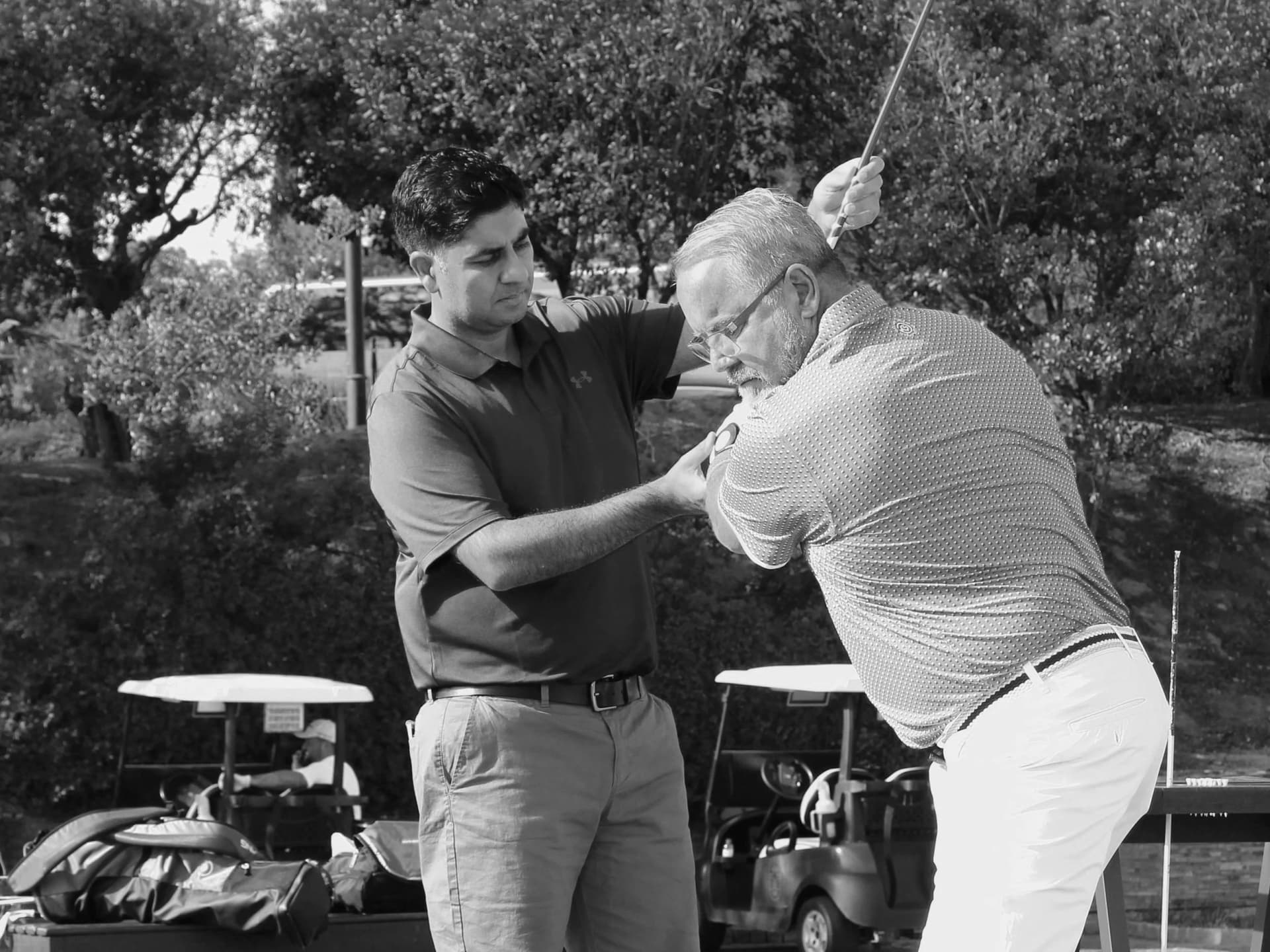

You are not alone if you slice the ball
The slice is the most common fault in golf. It affects an estimated 80% of amateur players at some point, and for many, it becomes a permanent, round-wrecking companion. That banana curve to the right (for right-handed golfers) costs you distance, accuracy, and confidence, especially off the tee.
The good news is that a slice is entirely fixable. Once you understand what causes it, the corrections are straightforward and repeatable.
Straight to the Pin
A slice comes from an open clubface combined with an out-to-in swing path at impact. The fixes, worked one at a time, are strengthening your grip (two to three knuckles visible), squaring your alignment, fixing ball position, tucking your right elbow, starting the downswing with your hips, and swinging from the inside with a full follow-through. The headcover-gate drill gives instant feedback on your path. If the self-fixes are not holding, an hour with a PGA pro who can see your path on video sorts it faster than guesswork.
What causes a slice in golf?
A slice happens when the clubface is open relative to the swing path at the moment of impact. That combination puts clockwise sidespin on the ball (for a right-hander), which curves it to the right.
There are two key factors:
- An open clubface at impact. The face is pointing to the right of where the club is travelling.
- An out-to-in swing path. The club cuts across the ball from outside the target line to inside it, like a glancing blow.
Most slicers have both problems working together, which is why the ball curves so dramatically. Fix one or both, and the slice disappears.
How does your grip cause a slice?
Your grip is the most common root cause of a slice, and it is the first thing to check. A weak grip (where your hands are rotated too far to the left on the club) makes it very difficult to square the clubface at impact.
How to check your grip
- Hold the club in front of you with your left hand (for right-handers).
- Look down at your left hand. You should be able to see two to three knuckles.
- If you can only see one knuckle, your grip is too weak. Rotate your left hand clockwise on the grip until two to three knuckles are visible.
- Your right hand should sit naturally on top, with the V formed by your thumb and index finger pointing toward your right shoulder.
This stronger grip position makes it much easier for the clubface to return to square at impact. Many golfers fix their slice simply by strengthening their grip.
How does your stance affect a slice?
When golfers start slicing, a common instinct is to aim further left to compensate. This actually makes the problem worse because it encourages an even more out-to-in swing path.
How to correct your stance
- Align your feet, hips, and shoulders parallel to the target line. Use an alignment stick or a club laid on the ground during practice to verify this.
- Position the ball correctly. For a driver, the ball should be opposite the inside of your left heel. For irons, it moves progressively back toward the centre of your stance.
- Avoid opening your shoulders at address. Many slicers unknowingly aim their shoulders left of the target even when their feet are aligned correctly. Check this by holding a club across your chest at address and seeing where it points.
How does your swing path create a slice?
The out-to-in swing path is the mechanical engine of the slice. Instead of the club approaching the ball from slightly inside the target line, it comes from outside and cuts across the ball.
How to fix your swing path
- Feel like you are swinging to right field. For right-handers, imagine you are hitting the ball toward first base in baseball. This promotes an in-to-out path.
- Drop your right elbow. On the downswing, let your right elbow tuck close to your right hip. If your right elbow flies away from your body, the club will approach on an outside path.
- Start the downswing with your lower body. Initiate the transition by shifting your weight to your left side and rotating your hips toward the target. If your shoulders start the downswing, the club gets thrown outward.
- Swing through the ball, not at it. Focus on a full follow-through where your hands finish high and to the left. An abbreviated, swiping finish is a hallmark of the slice swing.
Does your equipment contribute to a slice?
Sometimes, yes. A driver with very little loft (say 8 or 9 degrees) is harder to square at impact and tends to produce more sidespin. Stiff shafts can also contribute if your swing speed does not match them.
Consider these equipment checks:
- Use a driver with at least 10.5 degrees of loft. More loft reduces sidespin.
- Check your shaft flex. If your swing speed is below 90 mph, a regular flex shaft is likely more appropriate than stiff.
- Try an offset or draw-bias driver. Many manufacturers (Callaway, TaylorMade, Ping) make drivers specifically designed to help close the face at impact.
Equipment alone will not cure a fundamentally flawed swing, but the right setup makes the corrections easier to implement.
What is the difference between a slice and a fade?
A fade is a controlled, slight left-to-right ball flight. Many top professionals play a deliberate fade because it is repeatable and easier to control than a draw. A slice is an uncontrolled, exaggerated version of the same curve.
The key difference is magnitude and intent. If you are shaping the ball five to ten yards left to right on purpose, that is a fade. If the ball is curving 30 yards right and finishing in the trees, that is a slice.
Once you have eliminated the slice, you may find that a gentle fade becomes your natural shot shape. That is perfectly fine. Do not feel the need to turn it into a draw unless you want to.
Quick drill: the headcover gate
This is one of the most effective drills for fixing an out-to-in swing path.
- Place a headcover (or empty water bottle) on the ground about six inches outside and behind your ball, on the far side of the target line.
- Make your normal swing.
- If you hit the headcover, your club is approaching from outside the target line. That is the slice path.
- Adjust your swing to avoid the headcover. You will naturally start swinging more from the inside.
- Repeat until you can consistently miss the headcover. Start with half swings and build up to full speed.
This drill gives you instant feedback. Within 20 to 30 balls, most golfers start seeing a straighter ball flight. Practice this at the range two or three times before taking it to the course.
Get Lessons from a PGA Professional
If you'd like personal guidance on what we've covered, browse golf lesson vouchers across the UK. Redeemable at venues nationwide and valid for 12 months.
Golf Lesson Vouchers
One-to-one lessons with PGA professionals at venues across the UK.


A step-by-step summary for fixing your slice
- Strengthen your grip. Rotate your left hand clockwise until you see two to three knuckles at address.
- Check your alignment. Feet, hips, and shoulders should all be parallel to the target line.
- Fix your ball position. Driver opposite the left heel, irons progressively centre.
- Tuck your right elbow. Keep it close to your body on the downswing.
- Start the downswing with your hips. Shift your weight left before your shoulders rotate.
- Swing from the inside. Feel like you are hitting toward right field.
- Follow through fully. Finish with your hands high, belt buckle facing the target.
Work on these one at a time. Trying to change everything at once leads to confusion. Start with the grip, then the path, then refine from there. Within a few range sessions, the slice will be a memory.
Founder & Tour Professional
Sandeep Grewal is a former tour professional and the founder of Swyng. He personally handles every booking and redemption.
About Sandeep
Explore More Gift Guides
Discover curated golf gift guides for every occasion - from birthdays to retirement and everything in between.
Browse All Guides
