
Golf Etiquette: The Unwritten Rules Every Player Should Know

Why does golf etiquette matter so much?
Golf is one of the few sports where you referee yourself and share the playing field with dozens of other groups simultaneously. Good etiquette is what keeps everything running smoothly. It is not about snobbery or rigid tradition. It is about respect: for the course, for the other players around you, and for the game itself.
Most etiquette mistakes happen because nobody explained the rules in the first place. This guide covers everything you need to know, from the basics that matter on every round to the finer points that mark you out as someone who understands the game.
Straight to the Pin
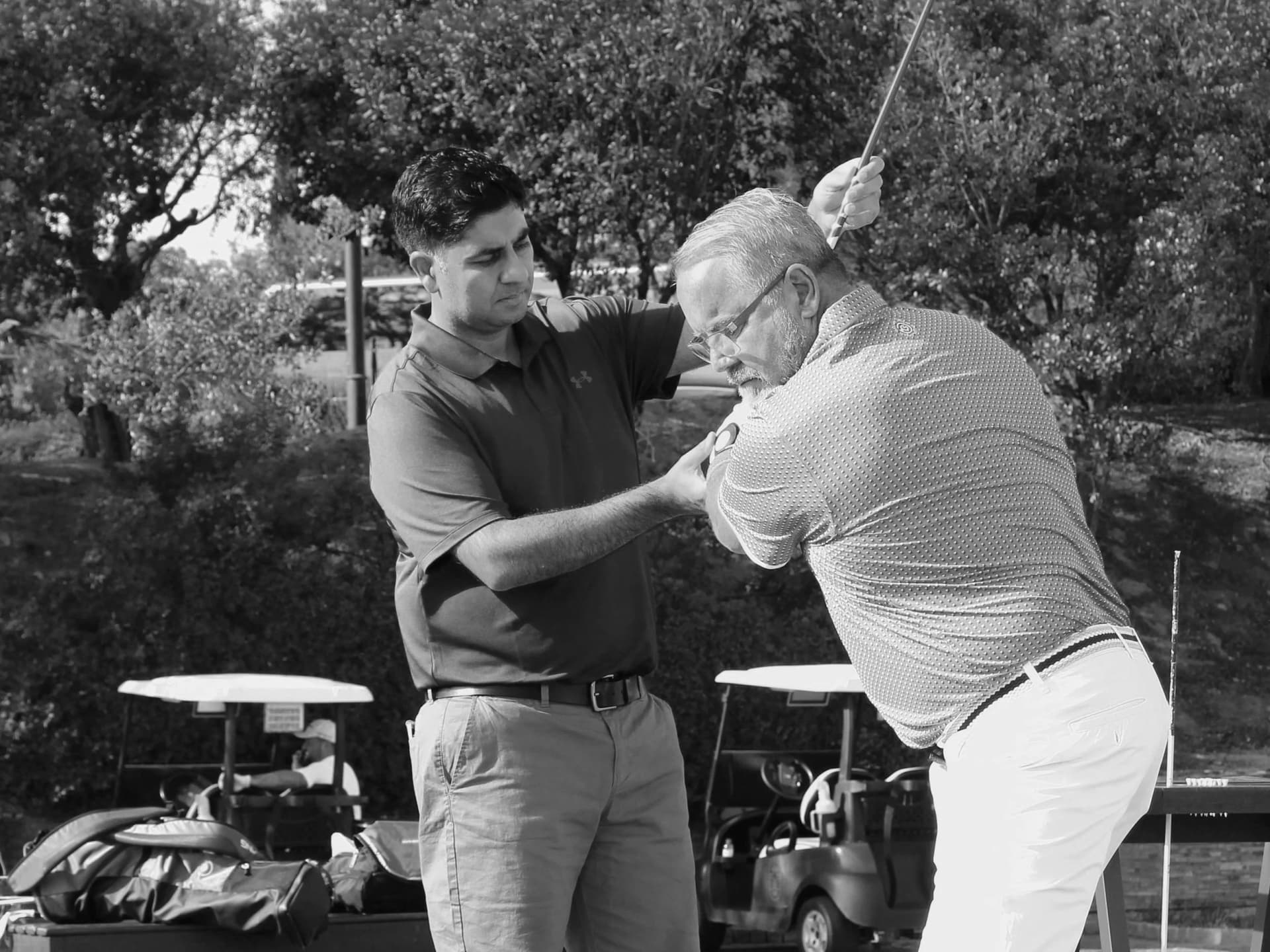
The core etiquette rules: keep up the pace of play (around four hours for a fourball), stay quiet and still while others play, repair your pitch marks, replace your divots, rake bunkers after you play from them, never stand on another player's putting line, and let faster groups through when the hole ahead is clear. Most of it is easiest to pick up on the course, so a playing lesson with a PGA pro lets you learn the unwritten code as you play.
What are the most important rules of golf etiquette?
Keep up with the pace of play
Slow play is the single biggest frustration in amateur golf. The expectation at most UK courses is that a fourball completes 18 holes in around four hours to four hours fifteen minutes. Here is how to keep up:
- Be ready to play when it is your turn. Start reading your putt, selecting your club, and planning your shot while others are playing.
- Walk briskly between shots. You do not need to sprint, but a purposeful walk makes a significant difference over 18 holes.
- Limit your practice swings. One rehearsal swing is plenty. Two at most. Five practice swings before every shot is a guaranteed way to annoy everyone.
- If you lose a ball, spend no more than three minutes looking. Under the current Rules of Golf, you are allowed three minutes. Use them, then move on.
- Play a provisional ball if there is any chance your tee shot might be lost or out of bounds. This avoids the dreaded walk back to the tee.
Be quiet and still when others are playing
Golf requires concentration. When someone in your group is addressing the ball or making a swing, stand still and stay quiet. This means no talking, no rustling through your bag, and no moving in their peripheral vision.
Position yourself to the side or behind the player, never directly behind the ball or in their line of sight. On the putting green, be particularly aware of standing in their eye line or on the extension of their putt line.
Repair your pitch marks on the green
Every time your ball lands on the green and leaves an indentation, repair it. Use a pitchfork or divot repair tool, and do it properly: push the edges of the mark inward toward the centre, then smooth the surface with the sole of your putter. Do not lift the turf upward, as this tears the roots and delays healing.
While you are at it, repair any other unrepaired pitch marks you see nearby. The greenkeepers will thank you, and so will every golfer who putts over that spot after you.
Replace your divots on the fairway
When your iron shot lifts a piece of turf from the fairway, pick it up and replace it. Press it down firmly with your foot. Some courses provide divot mix (a sand and seed mixture) on the tees. Use it to fill your divot if the turf has disintegrated.
Rake bunkers after you play from them
Always rake the bunker after your shot. Smooth out your footprints and the area where your club struck the sand. Most clubs ask you to leave the rake inside the bunker, but some prefer them placed outside. Follow whatever convention you see at that particular course.
Enter the bunker from the lowest point to avoid damaging the face, and exit the same way.
How should you behave on the tee?
The first tee sets the tone for the entire round. Here are the key points:
- The player with the lowest handicap or the best score on the previous hole has "the honour" and plays first. On the first tee of a casual round, many groups simply agree on an order or toss a tee.
- Stand away from the tee box while someone is playing. Behind and to the side is the standard position.
- Keep quiet. No comments about their swing, no conversation with someone else. Wait until the ball has landed.
- Tee up within the markers. You can go back up to two club lengths behind the markers, but never in front of them.
What are the rules on the putting green?
The putting green has its own set of etiquette standards:
- Do not step on another player's putting line. The line between their ball and the hole is sacred. Walk around it.
- Tend the flag if asked, and remove it once the putt is struck if they prefer it out. Under the current rules, the flag can be left in or taken out.
- Mark your ball if it could be in another player's line or distract them. Use a small coin or ball marker placed directly behind the ball.
- Do not stand in another player's eye line while they are putting. Move to the side.
- Be ready to putt when it is your turn. Read the green while others are putting, not when you step up to your ball.
How do you handle the course itself?
Trolleys and buggies
If you are using a trolley, keep it off tees, greens, and the closely mown areas around greens. Most courses have signs indicating trolley routes. Follow them.
If using a buggy, obey all cart-path-only rules, especially in wet conditions. Never drive a buggy within 10 metres of a green.
Mobile phones
Keep your phone on silent. If you must take a call, step away from the group and keep it brief. Using your phone to check distances or scores is generally accepted, but long conversations or scrolling through social media while others wait for you is not.
Music
Some groups enjoy playing music on the course. If you do, keep the volume low enough that other groups cannot hear it. Better yet, use a single earbud. Many courses discourage or prohibit speakers entirely, so check the local rules.
What about letting faster groups through?
If the group behind you is waiting on every shot and the hole ahead of you is clear, let them through. This is not an admission of slow play. It is good manners.
Wave them through at a par 3 or after putting out on a green. Step to the side, let them play through, and continue at your own pace. Everyone benefits.
Equally, if you are a faster group, be patient. Do not hit into the group ahead. Wait until they are well out of range, and if they do not offer to let you through, ask politely at an appropriate moment.
Does the dress code still matter?
Dress codes vary widely across UK courses. As a general guide:
- Private members' clubs typically require a collared shirt, tailored trousers or shorts, and golf shoes. Denim, football shirts, and trainers are usually not allowed.
- Public and pay-and-play courses tend to be more relaxed, but smart-casual golf wear is always appropriate.
- Check before you arrive. Most club websites list their dress code, and a quick phone call can save an awkward conversation in the pro shop.
When in doubt, a polo shirt and chinos will get you onto virtually any course in the country.
Start Your Golf Journey Properly
A few lessons with a PGA professional saves years of bad habits. Beginner-friendly coaching vouchers redeemable at venues across the UK.
Best for New Golfers

A structured coaching package with a PGA professional, built for new and returning golfers. It covers the fundamentals from grip and stance to a repeatable full swing, redeemable at venues across the UK.
Format: PGA coaching
Level: Beginner
Key takeaways
- Pace of play is the most important rule. Be ready, walk with purpose, and play a provisional when in doubt.
- Repair pitch marks, replace divots, and rake bunkers. Leave the course as you would want to find it.
- Stay quiet and still when others are playing. Stand in the right position on the tee and green.
- Let faster groups through when the hole ahead is clear.
- Check the dress code before you arrive, especially at private clubs.
- Golf etiquette is not about elitism. It is about making the game enjoyable for everyone on the course.
Founder & Tour Professional
Sandeep Grewal is a former tour professional and the founder of Swyng. He personally handles every booking and redemption.
About Sandeep
Explore More Gift Guides
Discover curated golf gift guides for every occasion - from birthdays to retirement and everything in between.
Browse All Guides


