
Beginner's Guide to Golf Club Selection
Why does club selection confuse so many beginners?
Walk into any golf shop and you will find walls of drivers, irons, wedges, and putters in every price bracket imaginable. It is overwhelming, and it leads to one of the most common beginner mistakes: buying a full 14-club set before you know what half of them do. The truth is, you do not need 14 clubs to start playing. You need the right handful, and you need to understand when to reach for each one.
This guide breaks it all down. No jargon, no sales pitch, just practical advice on building a set that helps you learn the game without emptying your wallet.
What clubs does a beginner actually need?
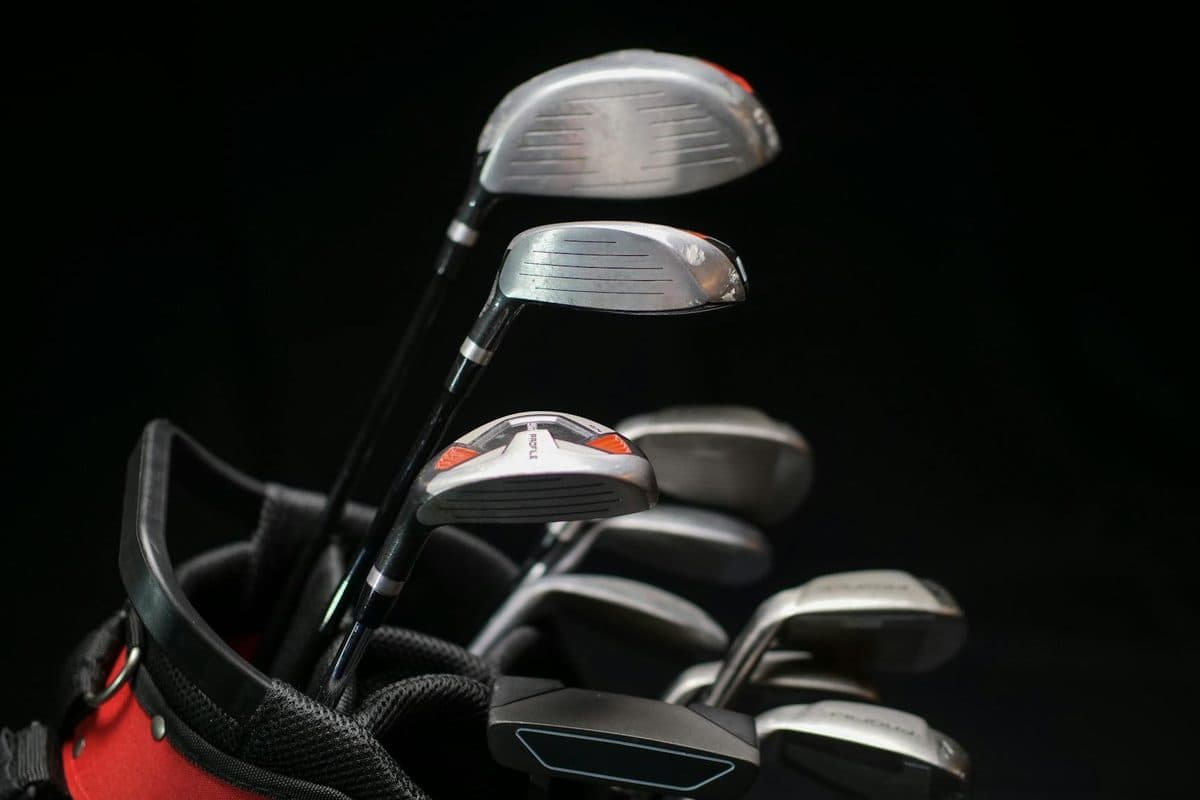
You are allowed to carry up to 14 clubs in your bag, but as a beginner, you will play better and learn faster with fewer. Here is the core set that covers every situation you will face on the course:
- Driver (or 3-wood for the tee)
- 5-wood or 7-wood
- 7-iron
- 9-iron
- Pitching wedge
- Sand wedge
- Putter
That is seven clubs. It is enough to play any course in the country, and it keeps things simple while you develop your swing.
What does each type of club do?
Driver
The driver is your longest club. It has the biggest head, the longest shaft, and it is designed to hit the ball the furthest off the tee. Most beginners find it the hardest club to hit consistently because its length makes the swing arc larger and timing more critical.
If you struggle with the driver early on, use a 3-wood off the tee instead. It is shorter, has more loft, and is significantly easier to get airborne.
Fairway woods (3-wood, 5-wood, 7-wood)
Fairway woods bridge the gap between your driver and your irons. A 5-wood or 7-wood is ideal for long shots from the fairway or for tee shots on shorter holes. The higher the number, the more loft the club has, and the easier it is to hit.
For beginners, a 7-wood is a brilliant option. It launches the ball high with minimal effort and can replace several hard-to-hit long irons.
Irons (typically 5-iron through 9-iron)
Irons are your mid-range clubs. Lower numbers (5, 6) hit further but are harder to strike cleanly. Higher numbers (8, 9) are shorter but much more forgiving. As a beginner, start with a 7-iron and a 9-iron. These two clubs cover most approach shot distances and are forgiving enough to build confidence.
Wedges
Wedges are your short-game specialists. The pitching wedge (PW) handles shots from around 80 to 110 yards for most beginners. The sand wedge (SW) is designed for bunker shots but is equally useful for chips and pitches around the green.
You do not need a gap wedge or lob wedge at this stage. Those come later as your short game develops.
Putter
The putter is the most-used club in your bag. You will use it on every hole, and it accounts for roughly 40% of your total strokes. Finding a putter that feels comfortable and rolls the ball smoothly matters more than any technical specification.
Should beginners buy a boxed set or build their own?
Both approaches work, but they suit different budgets and levels of commitment.
Boxed starter sets
Brands like Wilson, Callaway, and MacGregor offer complete beginner sets in the £200 to £400 range. These typically include a driver, fairway wood, a selection of irons, a wedge, a putter, and a bag. They represent excellent value and get you on the course immediately.
Good options:
- Wilson SGI (around £250 to £300): Solid all-round starter set with forgiving irons
- Callaway Strata (around £300 to £400): Well-balanced set with a good bag included
- MacGregor CG3000 (around £200 to £250): Budget-friendly and perfectly adequate
Building a set gradually
If you prefer to choose each club individually, buy second-hand. Sites like Golf Bidder, eBay, and local pro shop trade-in sections are packed with quality used clubs at a fraction of new prices. Start with the seven clubs listed above, spend £150 to £300 total, and upgrade as your game develops.
How do you know which clubs suit your swing?
Loft and forgiveness matter most
As a beginner, prioritise two things: loft and forgiveness. Clubs with more loft (higher degree numbers) launch the ball higher and are easier to hit. Forgiving clubs have larger heads and wider soles, which means off-centre strikes still travel a reasonable distance.
Look for irons labelled "game improvement" or "super game improvement." These are specifically designed for higher handicappers and beginners.
Shaft flex
Shafts come in different flexes: ladies (L), senior (A), regular (R), stiff (S), and extra stiff (X). Most male beginners should start with regular flex. Most female beginners should start with ladies flex. If you have a naturally fast swing, stiff might suit you better, but regular is the safe default.
Club length
Standard-length clubs suit most people between about 5'6" and 6'1". If you are significantly taller or shorter, consider a basic fitting. Many pro shops offer free or low-cost fitting sessions that take 20 minutes and ensure your clubs are the right length and lie angle.
What is the best order to add clubs to your bag?
Once you have your core seven clubs and your game is developing, here is a sensible order for filling out your set:
- Hybrid (4 or 5): Replaces long irons, much easier to hit
- 6-iron: Fills the gap between your 7-iron and hybrid
- 8-iron: Gives you finer distance control between 7 and 9
- Gap wedge (50 to 52 degrees): Fills the yardage gap between pitching wedge and sand wedge
- 3-wood: For longer tee shots and fairway distance
- 5-iron or additional hybrid: Whichever suits your swing
How much should a beginner spend on golf clubs?
| Budget | What You Get | Recommendation |
|---|---|---|
| Under £200 | Second-hand starter set from Golf Bidder or local pro shop | Great for testing if you enjoy the game |
| £200 to £400 | New boxed starter set (Wilson, Callaway, MacGregor) | Best value for committed beginners |
| £400 to £700 | Mix of new and used individual clubs, possibly with a basic fitting | For beginners who know they are committed |
| £700+ | Custom-fitted new clubs | Wait until your swing is consistent (12+ months) |
The honest advice is this: spend modestly at first. Your swing will change significantly in your first year, and the clubs that suit you in month one may not suit you in month twelve. Save the big investment for when your game has settled.
Do you need a golf bag straight away?
Yes, but it does not need to be expensive. A lightweight stand bag in the £40 to £80 range is perfect for beginners. It is easy to carry, keeps your clubs organised, and has enough pockets for balls, tees, and a waterproof. Brands like Ogio, Ping, and Titleist all make good entry-level bags, and second-hand options are plentiful.
Start Your Golf Journey Properly
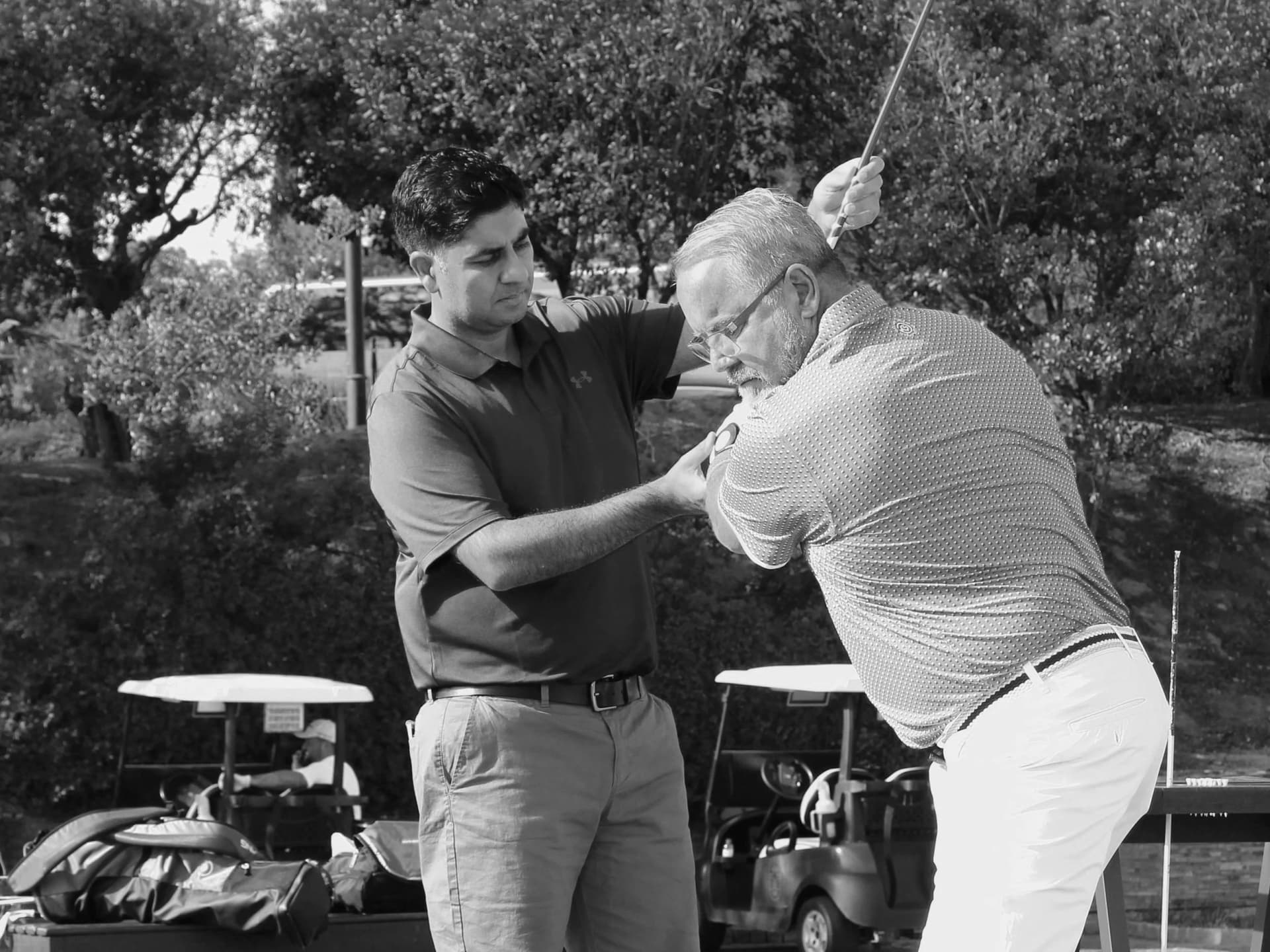
A few lessons with a PGA professional saves years of bad habits. Beginner-friendly coaching vouchers redeemable at venues across the UK.
Best for New Golfers

A structured coaching package with a PGA professional, built for new and returning golfers. It covers the fundamentals from grip and stance to a repeatable full swing, redeemable at venues across the UK.
Format: PGA coaching
Level: Beginner
Key takeaways
- Start with seven clubs, not fourteen. A driver (or 3-wood), a fairway wood, 7-iron, 9-iron, pitching wedge, sand wedge, and putter cover everything you need.
- Boxed starter sets from Wilson, Callaway, or MacGregor offer excellent value between £200 and £400.
- Prioritise forgiveness and loft over brand prestige or looks.
- Buy second-hand if you want to build a set gradually. Golf Bidder is a reliable source.
- Hold off on a professional fitting until your swing is consistent, usually after six to twelve months of regular play.
- The most important club in your bag is the putter. Find one that feels comfortable in your hands and rolls the ball where you aim it.
Founder & Tour Professional
Sandeep Grewal is a former tour professional and the founder of Swyng. He personally handles every booking and redemption.
About Sandeep
Explore More Gift Guides
Discover curated golf gift guides for every occasion - from birthdays to retirement and everything in between.
Browse All Guides


